
Babak Safaei: REFRESH fosters international and interdisciplinary collaboration
Babak Safaei, a specialist in applied computational mechanics, additive manufacturing, composite and nanocomposite materials, machine learning, and energy storage, has been working at VŠB–TUO for nearly a year. Within the REFRESH project at the Industry 4.0 & Automotive Lab (IAL), he focuses on applying additive manufacturing and nanomaterials supported by machine learning, and optimization methods for automotive and related engineering systems. He particularly values the project’s interdisciplinary nature and the opportunity to validate research in real-world application settings.
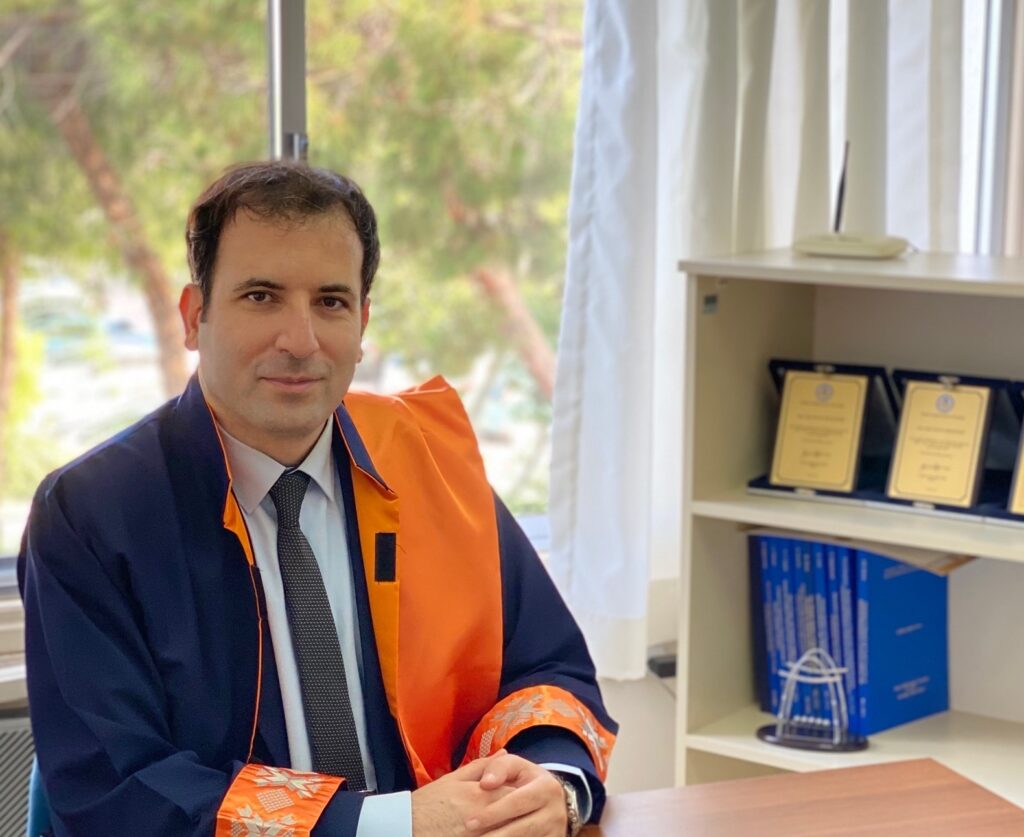
“My work includes areas such as design for additive manufacturing, computational mechanics, simulation- and data-driven optimization, and performance prediction using machine learning models. I place strong emphasis on lightweight structural design, lattice and auxetic architectures, and intelligent optimization of material and geometric parameters,” said, who earned his PhD from Department of Mechanical Engineering at Tsinghua University in China.
He was motivated to collaborate with researchers in Ostrava by shared research interests, especially in additive manufacturing, data-driven modeling and optimization, and automotive engineering. The REFRESH project subsequently created a solid framework for closer integration of these research directions within the living lab and for intensive interaction between research activities and application-oriented development.
“REFRESH is highly beneficial for me. It promotes interdisciplinary collaboration, provides access to living lab infrastructure, and enables the transfer of simulation, optimization, and data-driven methods into practical engineering solutions. At the same time, it strengthens international cooperation and enhances the visibility of results through joint publications and innovation-oriented outputs,” added Safei. He is the author of internationally recognized publications in additive manufacturing, computational mechanics, and machine learning applications in mechanics and advanced structural optimization. Among his key achievements in the REFRESH project, he highlights the development of optimized concepts for additively manufactured automotive components, the implementation of machine learning–based performance prediction models, and active involvement in living lab activities that connect theory, data, and practical applications.
And what challenges does he anticipate this year? “Looking ahead to 2026, the main challenges will be managing data quality and availability for machine learning, ensuring the robustness and interpretability of predictive models, and scaling optimized additive manufacturing solutions for practical use. It will also be essential to balance model complexity with computational efficiency and to maintain strong coordination among project partners to achieve long-term impact,” concludes the mechanical engineer, who also draws on many years of industry experience.