
Collaboration as a catalyst for breakthroughs in defense technology
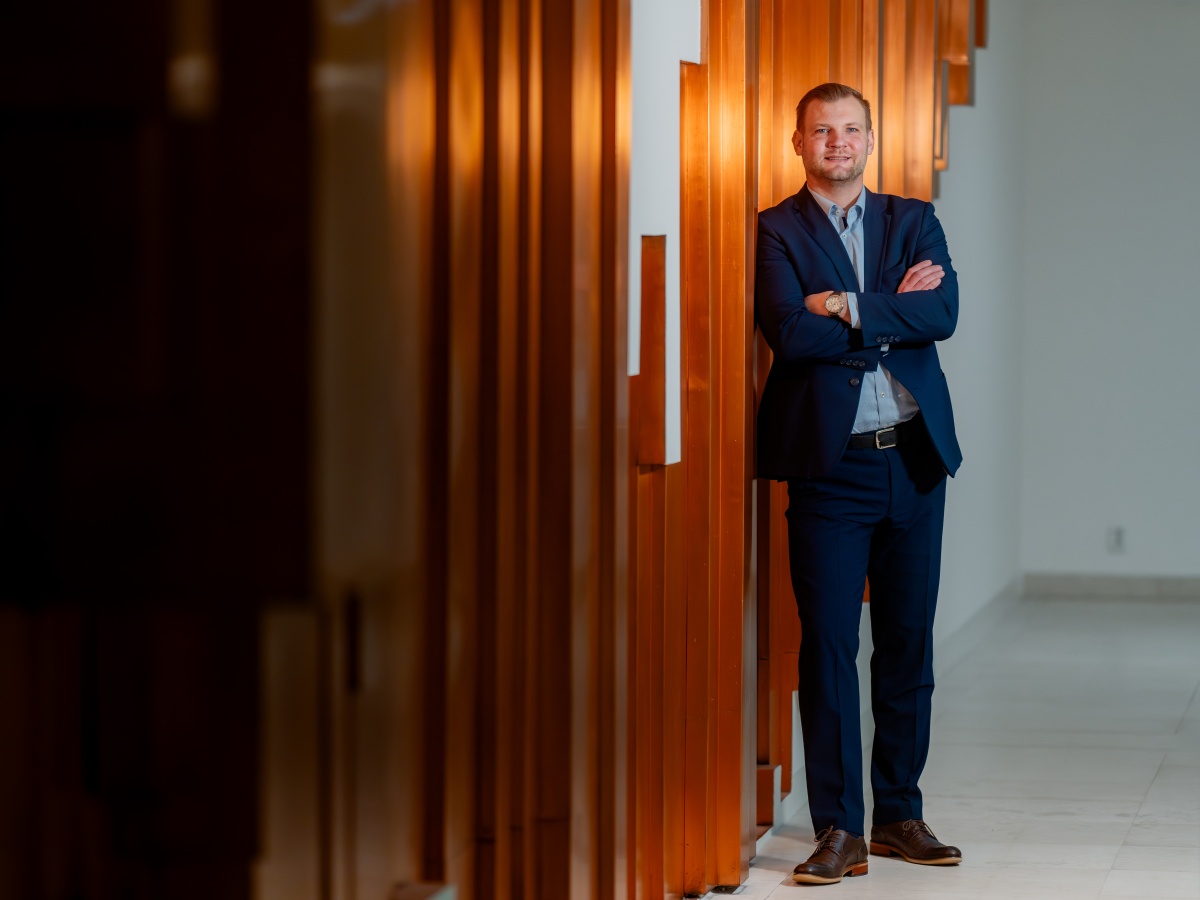
Innovation as the backbone of resilience. On March 24, VŠB-TUO, in cooperation with the Confederation of Industry of the Czech Republic, will host the Defence Tech Innovation 2026 conference, dedicated to this very topic. VŠB-TUO Rector Igor Ivan shared his views on the event and potential contribution to defense technologies.
The conference is taking place at VŠB-TUO. What led you to organize it here, and how important is it to hold such events in an academic environment?
The areas of defense and resilience are gaining increasing importance, and we have strong expertise to contribute. In recent years, partly thanks to the strategic REFRESH project, our university has expanded both its research teams and the scale and quality of its infrastructure. Innovation and technological advancement are essential not only in times of stability but also when society faces security challenges. Universities play a key role as drivers of these developments. That is why hosting the conference at VŠB-TUO is natural and significant.
Is the growing emphasis on innovation real, or is it more about how we perceive it, perhaps influenced by the current geopolitical climate?
Unfortunately, we are witnessing conflicts across the globe, where modern technologies clearly play a crucial role, whether through the increasing deployment of drones, autonomous systems, satellite imaging, artificial intelligence, or cybersecurity. Media coverage has brought these issues much closer to the public than before, amplifying their importance. At the same time, there is a growing focus on dual-use technologies, those with high added value that can serve both civilian and defense purposes.
What does VŠB-TUO bring to this field? How does it support the development of such technologies?
Our quantum computer is truly unique, the only one of its kind in the Czech Republic, and it provides exceptional opportunities for advancing European solutions in quantum computing, quantum communication, and post-quantum cryptography. However, this is far from our only strength. We are building strong collaborations in autonomous mobility for both civilian and military applications; the university hosts leading researchers working on advanced dual-use materials; and we have top-tier teams focused on sensors and sensor networks, artificial intelligence, 3D printing, and many other areas. Our experts will also contribute to the conference program.
With new challenges and risks emerging, are you planning any shifts, such as new research directions?
Above all, the mindset of universities, including ours, needs to evolve. In the past, protection against external threats was not seen as a major priority, but that is changing rapidly. At VŠB-TUO, we aim to build on our recent progress and develop technologies applicable in everyday civilian contexts and in addressing security or crisis situations. We also place strong emphasis on space research, as aerospace and aviation have always been closely connected with the military and defense sectors.
That is why two of our projects are planned to be part of Czech astronaut Aleš Svoboda’s mission to the International Space Station. I could also mention materials research related to semiconductors and nuclear energy technologies. These are all areas currently being intensively developed at our university. I would also highlight the field of drones and unmanned aerial vehicles, where a student association has been established to bring together participants from several faculties.
How did the collaboration with the Confederation of Industry of the Czech Republic for this conference come about?
The Confederation of Industry has long been a key partner, and we maintain a strong, ongoing collaboration. We place emphasis on cooperation with companies, so this partnership is a natural fit. This is not our first joint event, although previous ones were smaller in scale. Our synergy works very well.
What collaborations with companies in the defense sector are already underway at VŠB-TUO?
For example, we collaborate with Tatra Trucks, particularly in the development of autonomous vehicles, not only for civilian use. We are also expanding partnerships with various industrial actors in the application of quantum technologies, supercomputing, and in the broader field of dual-use technologies.
The conference aims to connect companies, academia, and the government. Do you consider this form of cooperation in the Czech Republic sufficient?
There is always room for improvement. The Czech research environment has a great deal to offer, and we need to make full use of it. Within this partnership, companies bring pressure for speed, quality, and economic relevance, while the public sector can provide support for these activities. That is also why I see the conference as important; it creates a suitable platform for such collaboration. When these three sectors work together, significant progress can be achieved, particularly in the area of dual-use technologies.