
Josef Bělica: REFRESH has a clear strategy and goals
The REFRESH project is one of the key tools designed to help the Moravian-Silesian Region cope with the impacts of coal decline and industrial restructuring. The region is also a partner and active codesigner of the strategies underpinning the initiative. In an interview, Josef Bělica, Governor of the Moravian-Silesian Region and member of REFRESH’s Board, spoke about the benefits of the project and the need for long-term and stable support for structurally affected regions.
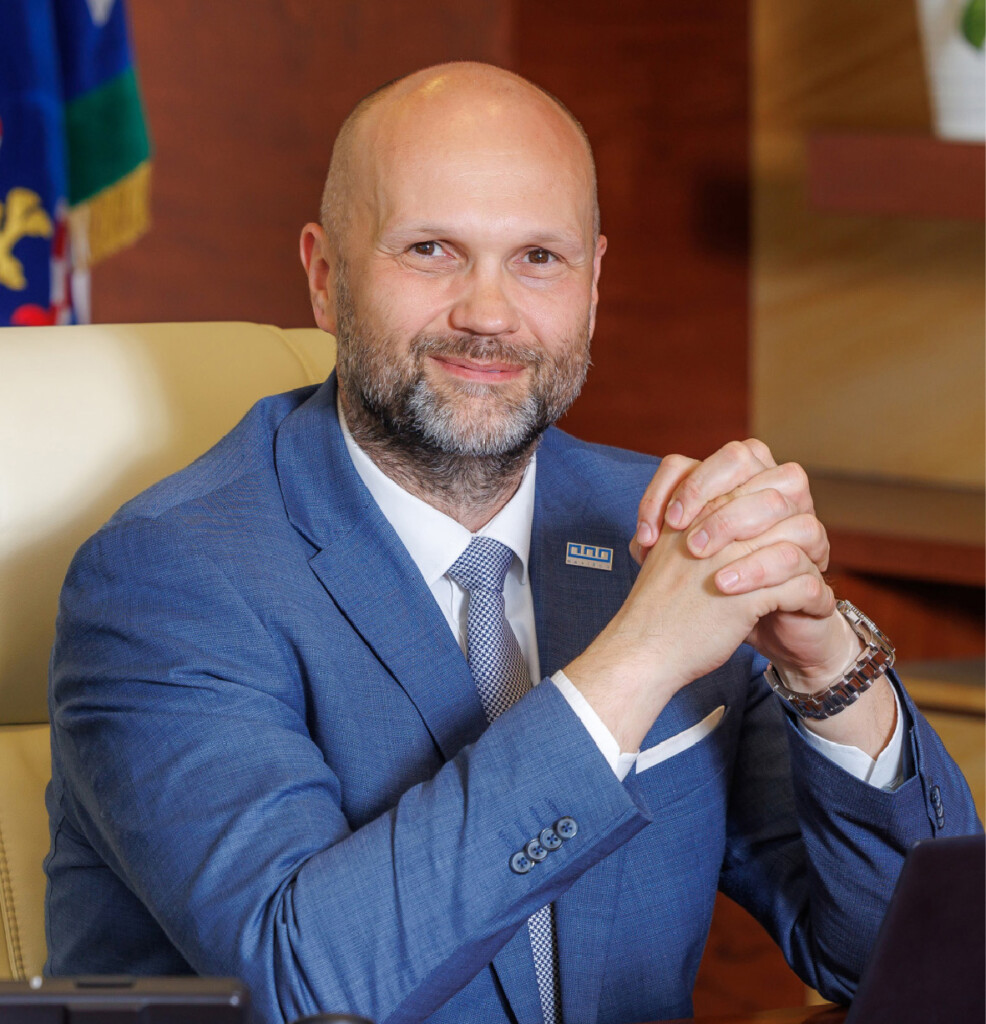
From the governor‘s perspective, how do you assess the Operational Programme Just Transition and its benefits for the region?
I regard the Operational Programme Just Transition (OP JT) as one of the essential instruments helping the Moravian-Silesian Region respond to the profound changes brought about by the decline of coal mining. It enables us to draw on European funding for projects that genuinely shape the region’s future – supporting innovation, education, entrepreneurship, and overall quality of life. It is a program that helps the region not only economically, but also socially.
With the European funds we have received, I feel that the Moravian-Silesian Region has gained new momentum. A range of promising projects is emerging, and cooperation with municipalities, universities, the private sector, and other organizations has intensified. Our region is becoming more visible, both nationally and internationally, as people come here for inspiration. Not long ago, I met with more than twenty ambassadors from EU member states who chose to visit our region. They were interested in how we are tapping into our potential and wanted to see the positive developments that are already apparent and may serve as an example for other European coal regions.
What do you consider the most significant benefit of the OP JT projects that were recently reviewed in the midterm evaluation?
The interim or midterm evaluation showed that these projects are already delivering tangible outcomes in our region. For me, the greatest value lies in their support for high-quality education, the development of new skills, job creation, and an environment that attracts talented individuals and companies. At the same time, they help ensure that the region is not only undergoing transformation but is also capable of generating new impulses for future growth.
How does REFRESH perform in this evaluation?
REFRESH is the largest and, I would even say, the most wide-ranging project. Over the course of its implementation, it has brought together two Ostrava universities and established four living laboratories staffed by leading researchers and internationally recognized experts. The project focuses on areas with strong potential for our region, such as autonomous and low-emission transport, emerging energy sources including hydrogen, and advanced materials for industry and business. The interim evaluation confirmed that REFRESH has a clearly defined strategy and goals, strong partnerships, and is able to connect research, innovation, and practical application in such a way that its technologies are already being applied not only in the Czech Republic but also around the world. From our perspective, this strategic project fully meets the expectations placed on the Just Transition initiative.
What do you personally value most about REFRESH?
What I appreciate most is that REFRESH is not merely a “project for its own sake,” but an initiative that generates new technologies and practical know-how. I value its capacity to bring together universities, businesses, and public institutions. Such synergy has long been lacking in the region, and REFRESH has managed to kick-start it. For me, a key outcome is the growing number of university students in the region and the arrival of excellent researchers from both the Czech Republic and abroad, who share their expertise with our universities and help strengthen the region’s intellectual capital.
Do you support the idea that research and innovation are key tools for addressing the region’s challenges?
Absolutely. Experience shows that regions investing in research and innovation tend to become economically stronger and more resilient. The Moravian-Silesian Region has significant potential thanks to its universities, research centres, and active companies. We want to cultivate this potential further because new technologies and innovative approaches are essential for ensuring the region’s long-term competitiveness.
How do you assess the cooperation with VŠB-TUO and OU within REFRESH? Do you have further plans in this regard?
Cooperation with both universities is excellent, and I see it as crucial for the region’s future development. VŠB–Technical University of Ostrava and the University of Ostrava have markedly different yet complementary profiles, which is a major advantage for transformation projects. I also believe that their impact is considerably stronger when they work together. Looking ahead, we plan to deepen our collaboration, whether in applied research, talent development, or creating an environment that attracts investment to the region and supports improvements in housing.
At the political level, discussions are underway about funding the transformation after 2027. Which option do you favour? Do structurally affected regions need another targeted instrument?
I am convinced that regions like ours require long-term, stable, and predictable support. Transformation is not a matter of three or five years—it is a process that will take decades. That is why I support the continuation of a targeted instrument that allows the financing of projects with lasting impact. If our transformation is to have a real and lasting effect, we need certainty that crucial initiatives can continue and progress beyond 2027.