Next-generation ultrafiltration membranes to eliminate even the most persistent contaminants from water
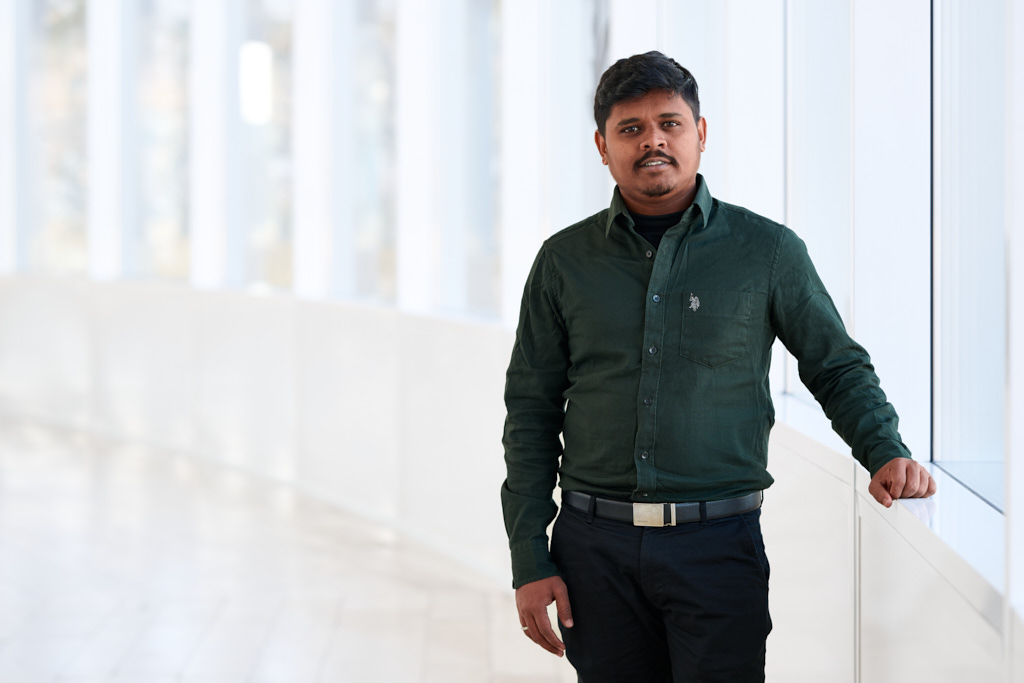
Manohara Halanur, affiliated with the CEET Materials–Envi Lab at VŠB–TUO, focuses on developing advanced ultrafiltration membranes for the removal of emerging micropollutants within the INSPIRE project, supported by the European ERA Fellowships programme. The integration of single-atom catalysts into membrane structures is expected to significantly enhance the efficiency of water purification, particularly in the removal of highly stable and toxic compounds. The two-year project received approximately CZK 5 million in funding.
“Securing this project is important to me as it is a major professional milestone that validates my research vision in sustainable water treatment. It will enable me to carry out ambitious research on catalytic membranes for the degradation of polyfluoroalkyl substances, known as PFAS. These are a group of synthetic chemical compounds containing fluorine and represent one of the greatest challenges in the field of water treatment. I want to translate the project’s results into real-world applications and help protect aquatic ecosystems and ensure safer water quality standards in Europe,” said Manohara Halanur, who also worked on membrane technologies at his previous position at Tel Aviv University in Israel.
The research targets the development of innovative approaches for the elimination of PFAS, which pose serious risks to ecosystems and human health. Owing to their exceptional chemical stability and toxicity, these substances are often described as “forever chemicals.” Conventional treatment methods generally fail to effectively decompose PFAS, thereby necessitating the development of novel, sustainable technologies.
The INSPIRE project will pioneer the development of ultrafiltration membranes incorporating single-atom catalysts that operate via piezo-photocatalytic mechanisms, enabling rapid and energy-efficient degradation of PFAS. In this system, catalytic activity is induced through the combined action of mechanical and light energy.
“The project is highly compelling and holds strong potential for practical application. The removal of PFAS from water represents one of the most pressing environmental challenges. The use of chemically active membranes is a particularly promising approach that integrates materials science and environmental engineering, offering the potential to both degrade and capture these highly toxic and persistent substances,” said Radek Zbořil, the project’s scientific advisor and head of MEL.
The ERA Fellowships call forms part of the Horizon Europe programme and builds on the MSCA Postdoctoral Fellowships. It is designed for research organisations based in the so-called widening countries of the European Union, including the Czech Republic. Its aim is to strengthen research excellence, promote the international mobility of researchers, and help reduce disparities in research performance across Europe.