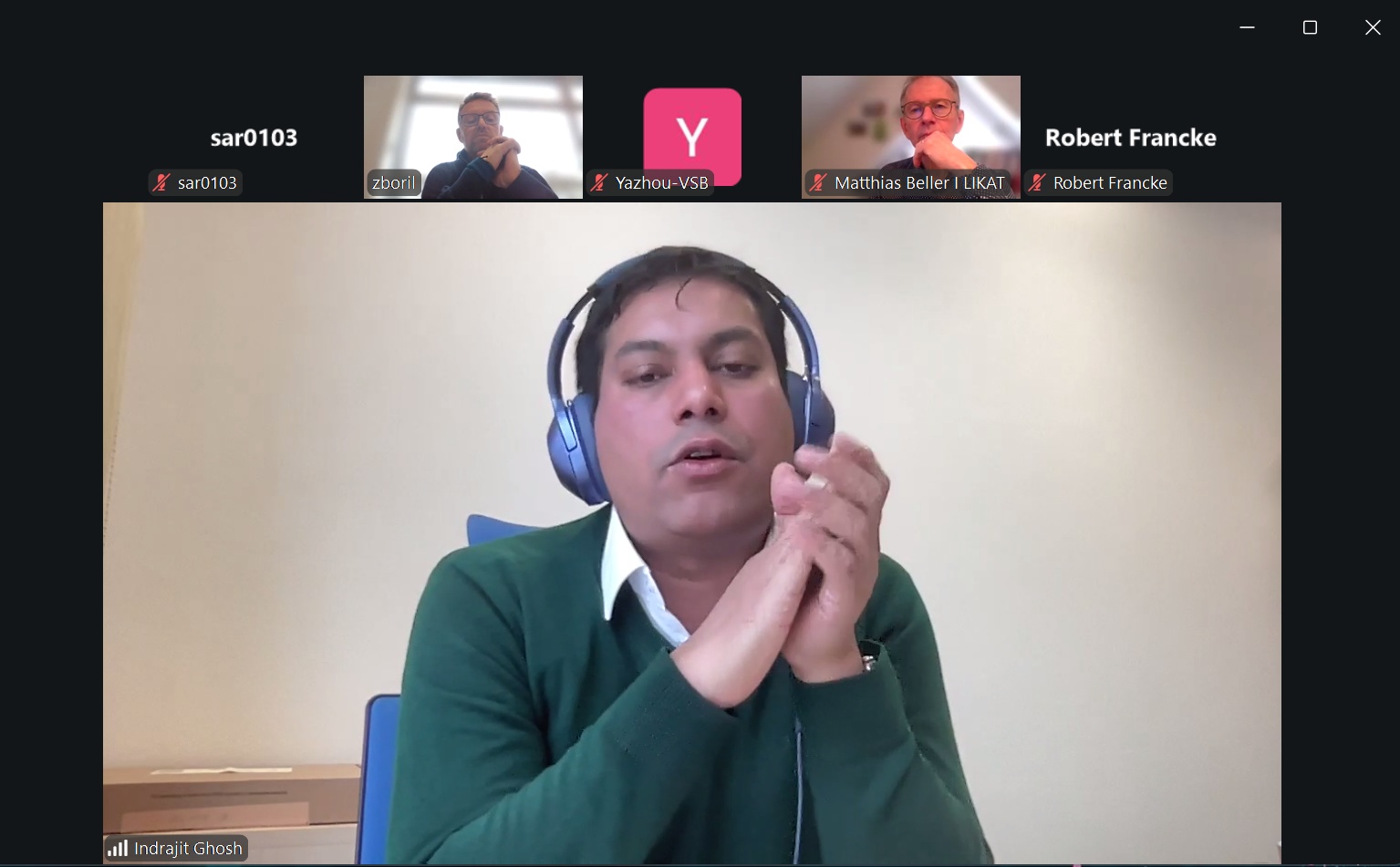
The symposium with LIKAT proved successful. A follow-up is planned in Ostrava
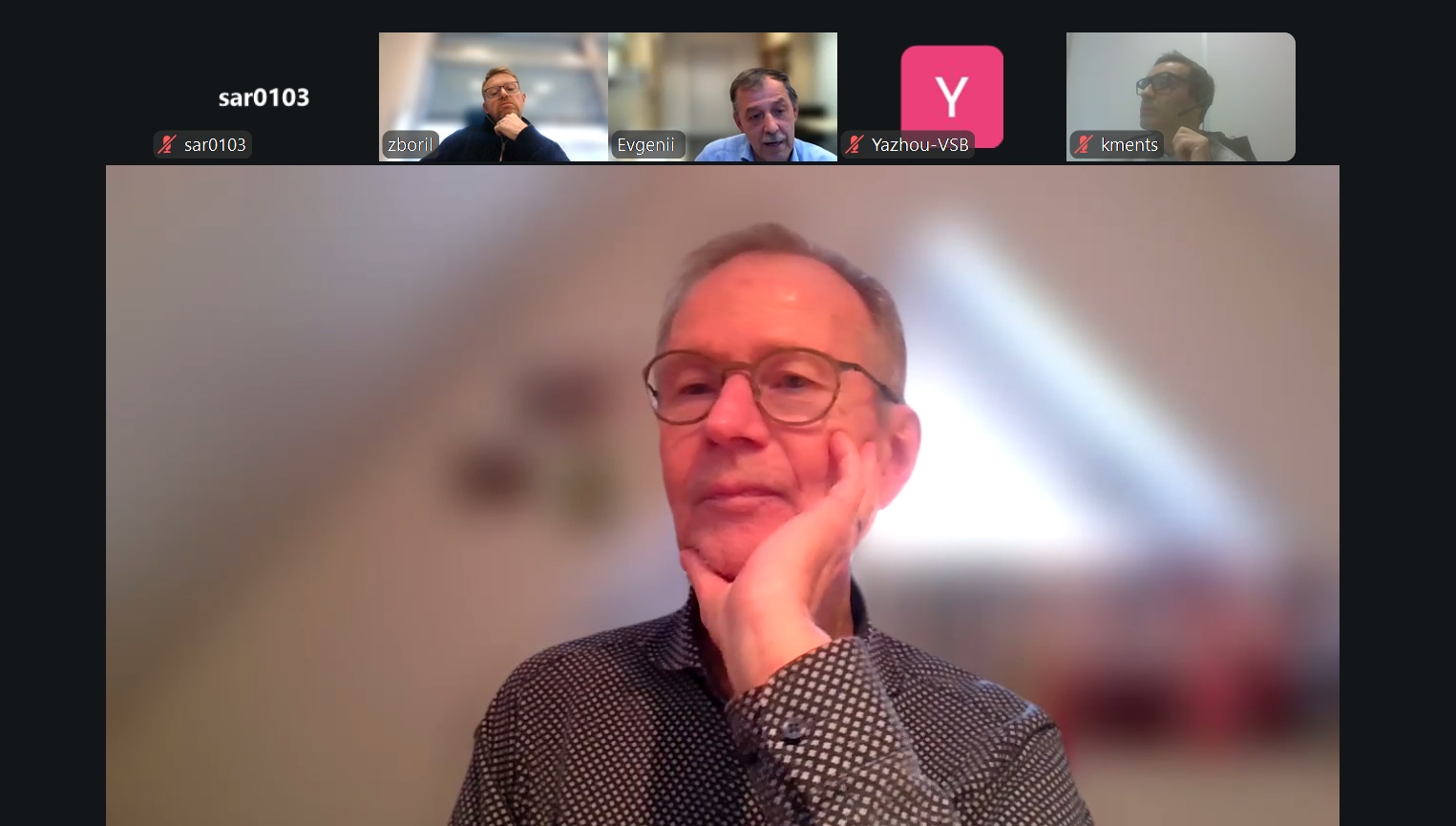
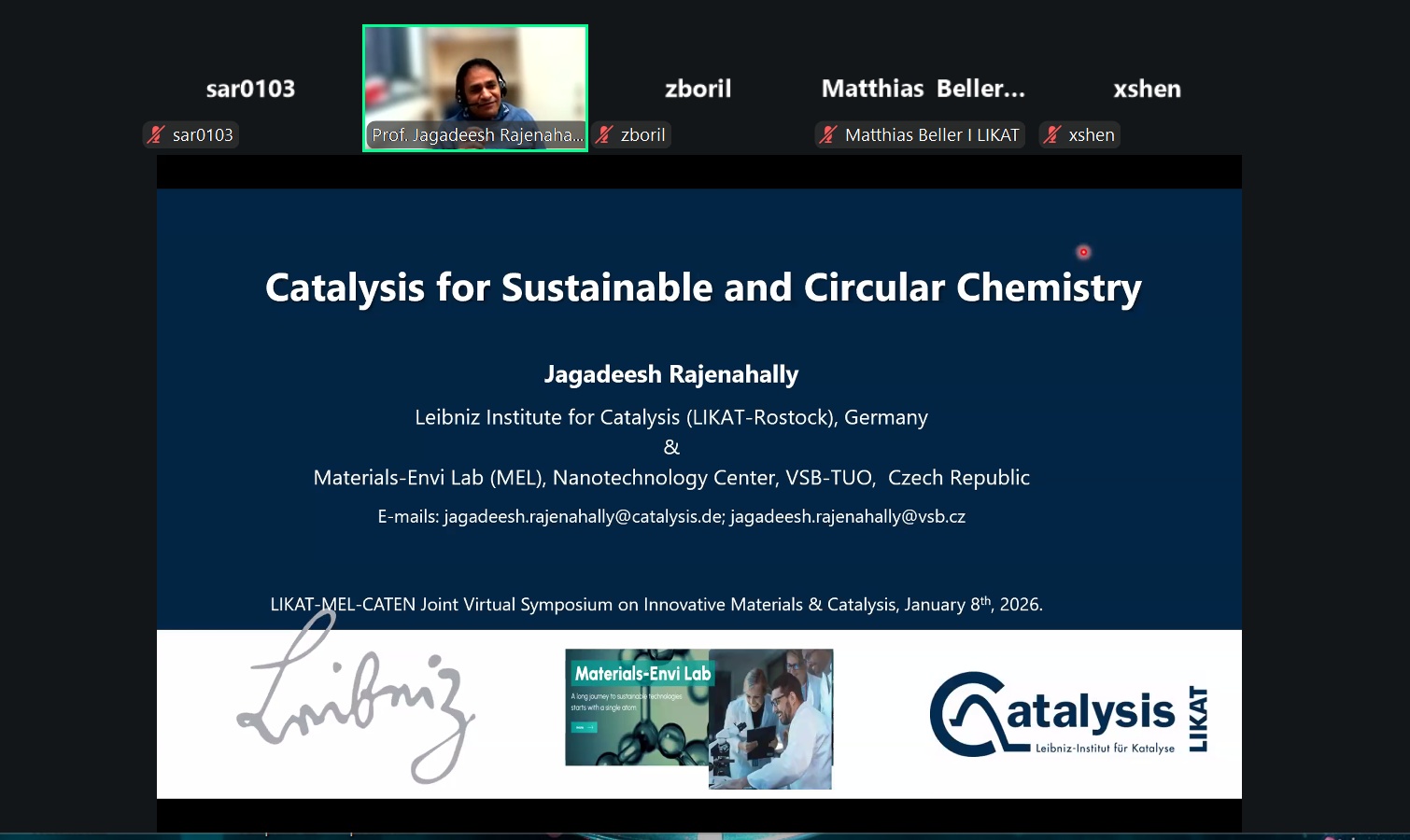
More than 80 researchers participated in a Joint Virtual Symposium on Innovative Materials & Catalysis, held on Thursday, January 8. The event was organized by the Materials-Envi Lab (MEL) at VŠB–Technical University of Ostrava, the Center for Advanced Technologies and ENgineering (CATEN), and the Leibniz Institute for Catalysis (LIKAT). In addition to increasing awareness of ongoing research, the presentations created space for new collaborative initiatives. A similar event, this time in person, is scheduled for September in Ostrava.
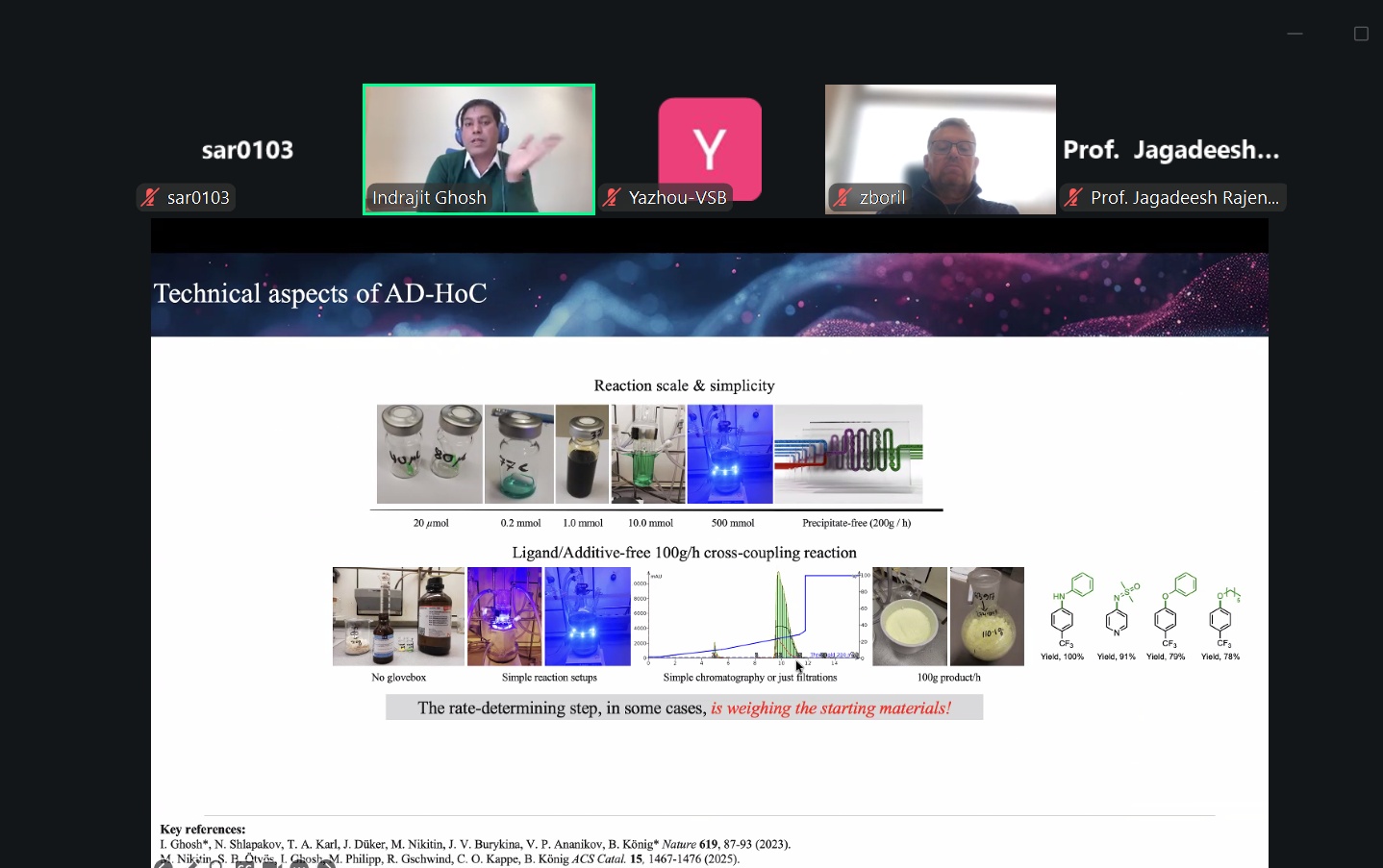
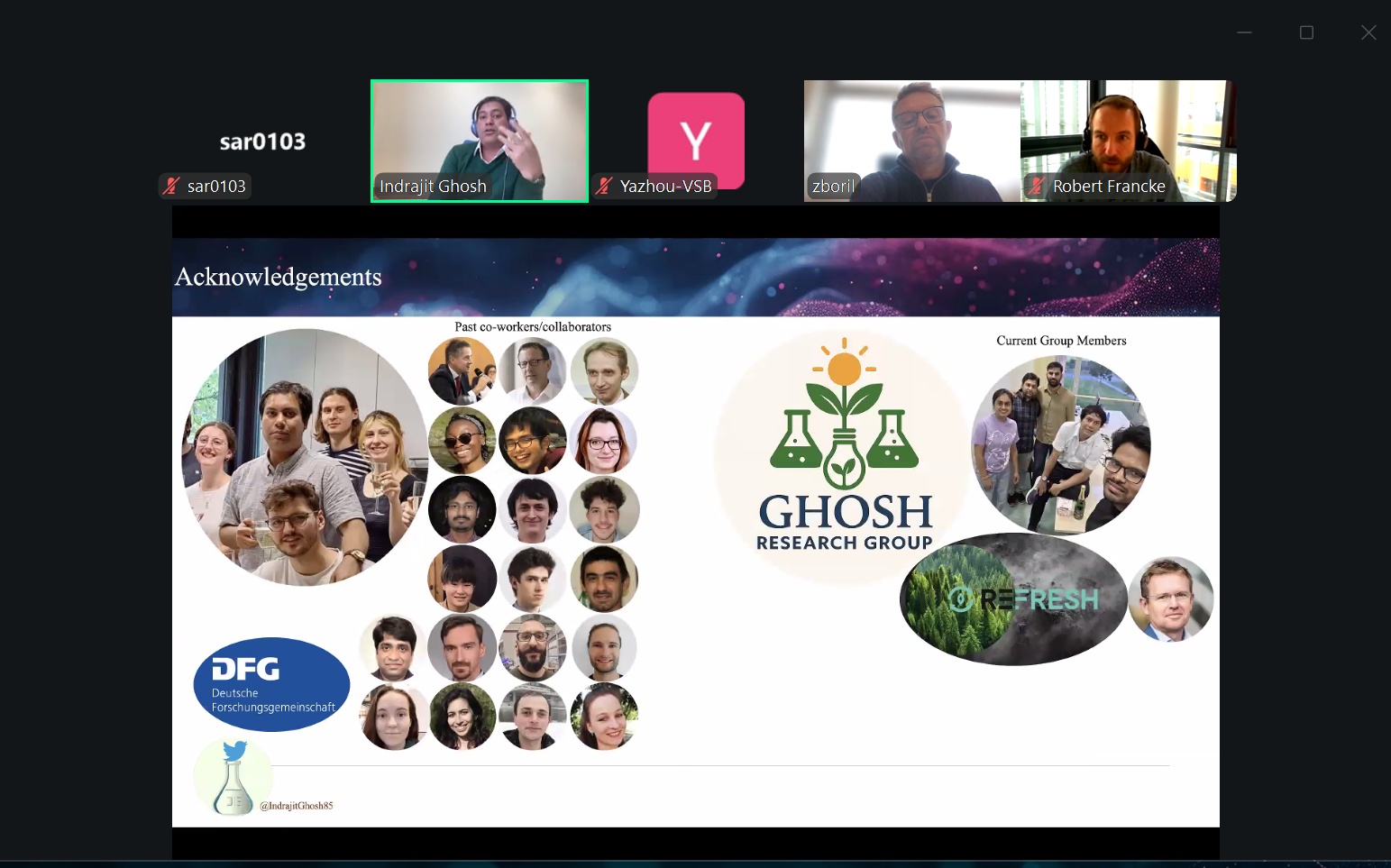
Among the speakers was Indrajit Ghosh from MEL, who presented a lecture entitled Photoredox Catalysis with One or Two Photons and Electron Transfer.
“The main goal of my talk was to give our colleagues from LIKAT an overview of our group’s work at MEL in the area of photoredox catalysis, particularly our efforts to address current challenges in metallaphotoredox catalytic systems. These research directions are essential for the development of more cost-effective and sustainable synthetic methodologies with practical applications in industrial chemistry, pharmacy, and agrochemistry,” said Ghosh. He also highlighted the high quality of the presentations and the subsequent expert discussions.
“I find it especially inspiring to receive valuable feedback from leading researchers such as Professors Matthias Beller and Radek Zbořil in a collegial and friendly environment. Their commitment to supporting the younger generation of chemists, including myself, in refining research projects and exploring new directions is extremely valuable,” he added.
The main objective of the symposium was to strengthen cooperation between Czech researchers and their counterparts from LIKAT in sustainable chemistry, catalysis, and materials engineering. The programme included topics such as catalysis for sustainable and circular chemistry, as well as the application of low-dimensional chemistry and single-atom engineering in advanced chemical technologies and modern energy systems.
At the conclusion of the meeting, Matthias Beller from LIKAT described the symposium as highly beneficial, noting the range of interesting topics and ideas for future collaboration. Together with co-organizer Radek Zbořil, he announced that the next meeting will be held in Ostrava in the autumn. The two teams have already co-authored nearly two dozen publications in leading journals, including Nature Nanotechnology, Nature Catalysis, and Nature Communications. “Participants will not only have the opportunity to identify new areas for scientific collaboration and discuss potential joint European grant projects, but we also plan to present in detail the unique MEL research infrastructure established through the REFRESH project. Its use is proving essential for characterizing the chemical and structural properties of newly developed catalysts and for understanding the mechanisms underlying their performance in specific applications,” Zbořil concluded.