VŠB-TUO and Valeo join forces: Experts review research outcomes and emerging challenges
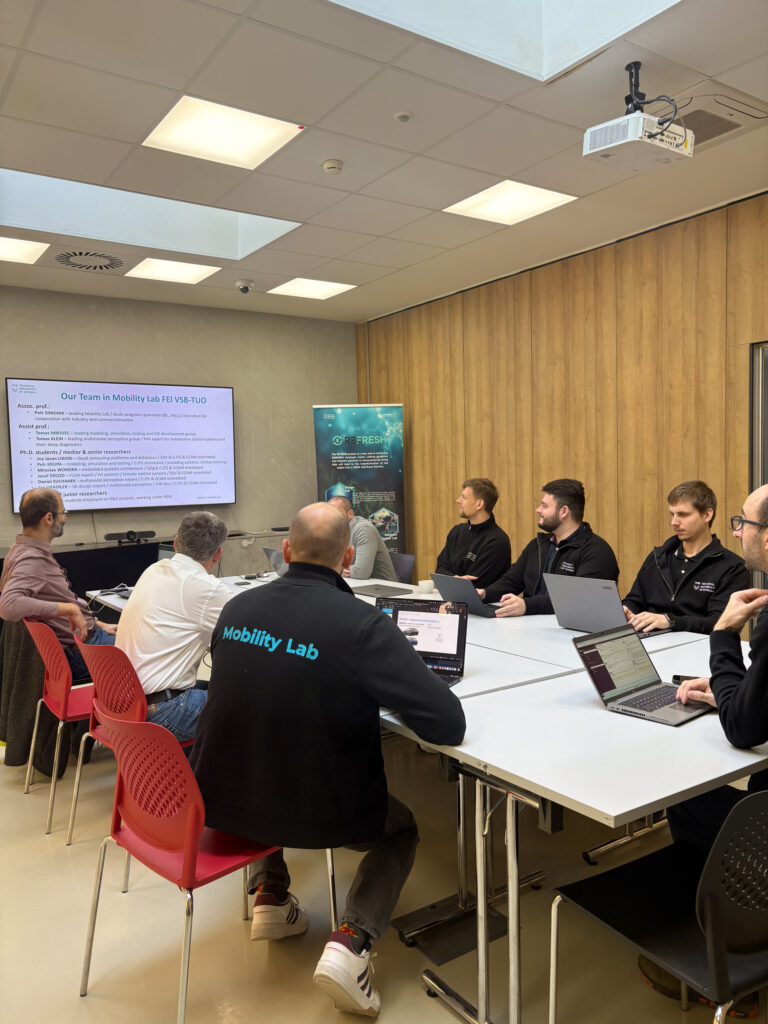
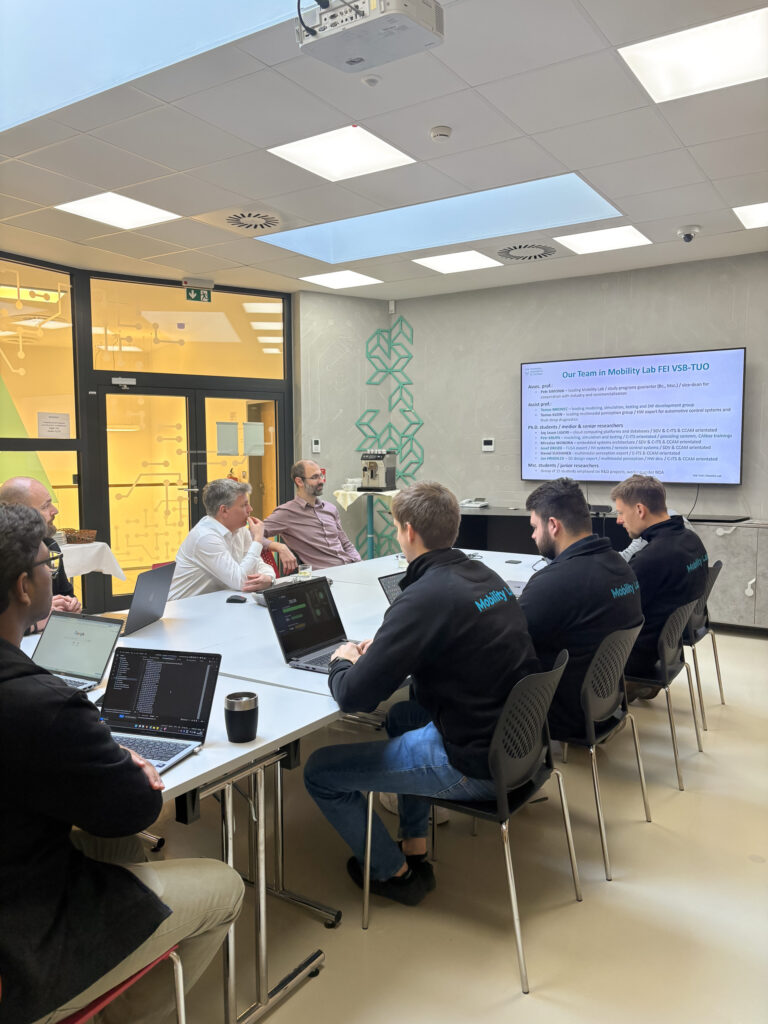
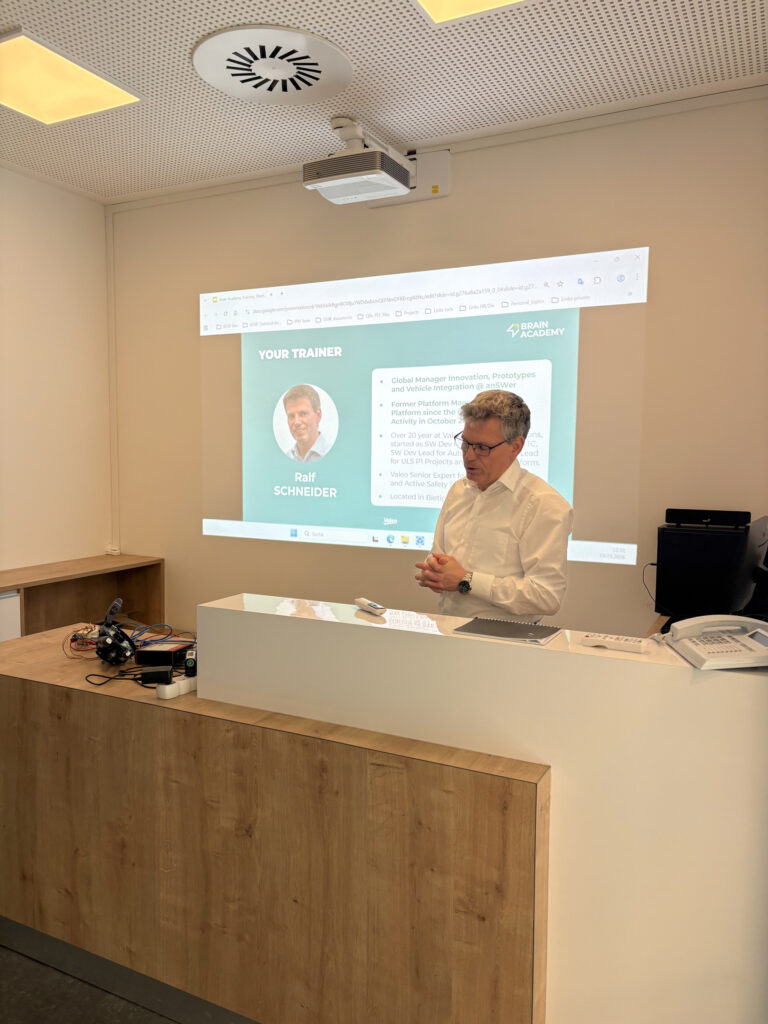
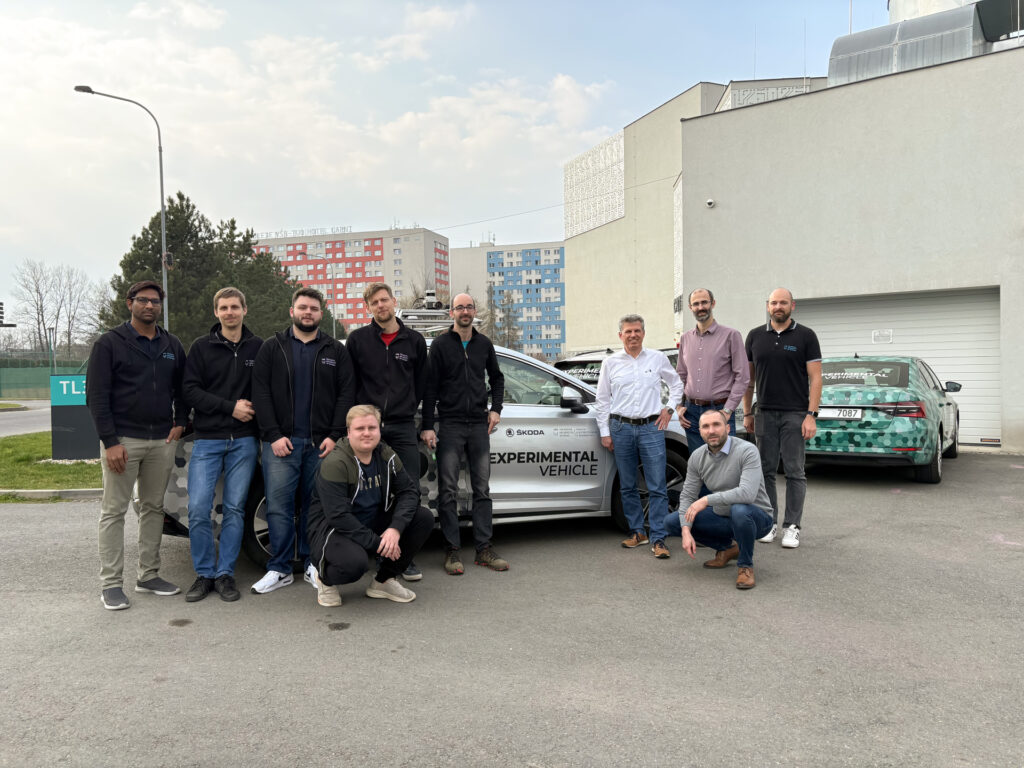
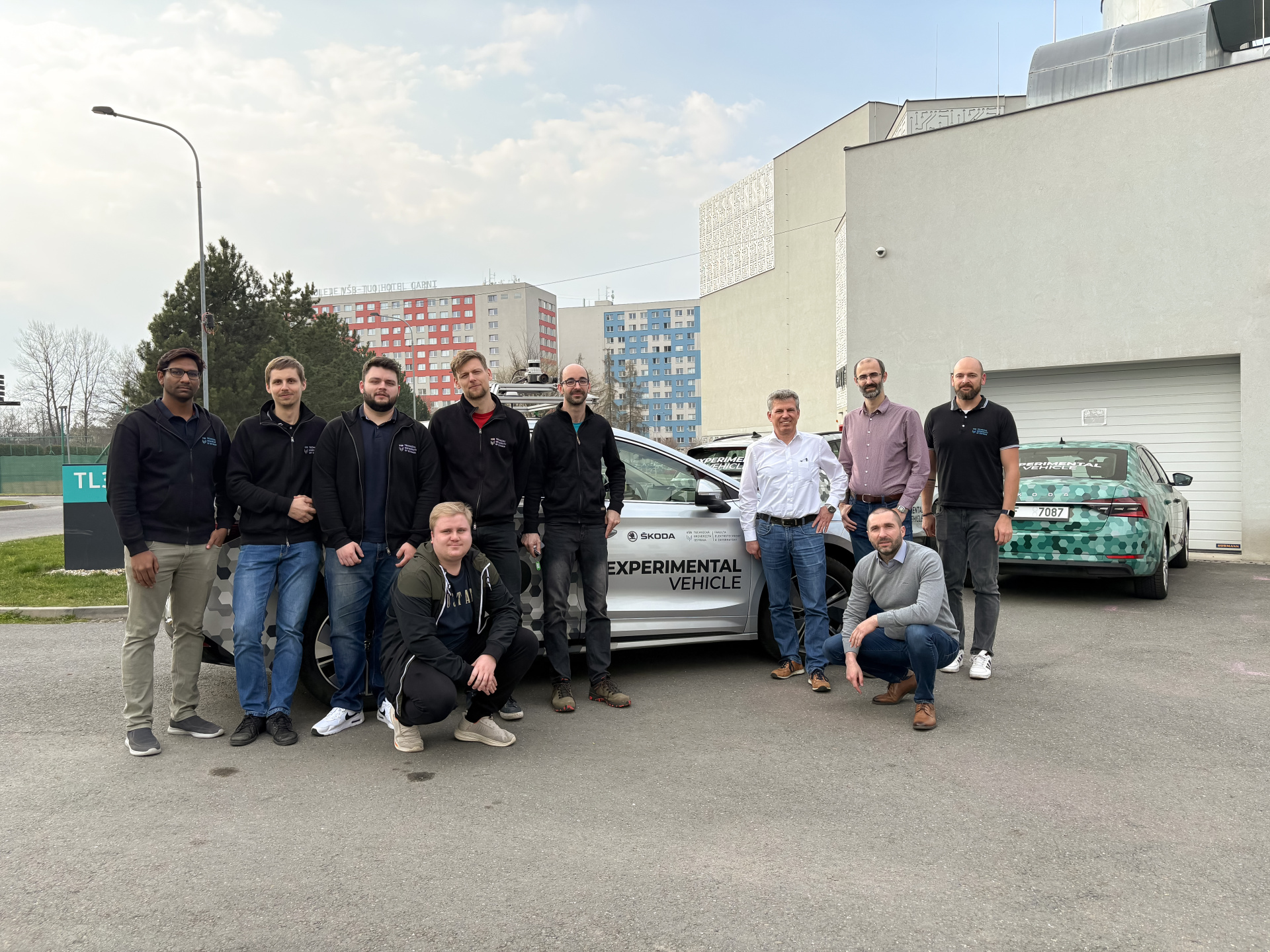
Presenting recent research results and establishing a framework for collaboration in the months ahead. That was the primary aim of the visit by Ralf Schneider, a leading expert in advanced automotive systems development at Valeo Germany, to the Mobility Lab at the Faculty of Electrical Engineering and Computer Science (FEECS) at VŠB–Technical University of Ostrava. Cooperation with this major global automotive technology supplier continues to expand, also supported by the REFRESH project, where the researchers are actively involved at the Industry 4.0 & Automotive Lab.
“This was another in a series of regular meetings focused on evaluating the current outcomes of our development activities, supported in part by funding from Valeo. Feedback is essential for ensuring that our collaboration is progressing in the right direction. It is both motivating and confidence-building. We also agreed on priorities for the upcoming period,” said Petr Šimoník, Head of the Mobility Lab and Vice Dean for Cooperation with Industry and Commercialization at FEECS.
His team has been collaborating with Valeo since 2019. Initial cooperation with R&D departments in the Czech Republic was subsequently extended to Germany, Japan, and Ireland, where the researchers also deliver technological solutions. Valeo has invested approximately CZK 25 million in the joint research to date.
Further momentum has been provided by REFRESH, where automated mobility represents a key research area. “Thanks to REFRESH, we are able to address new topics in this domain and pursue forward-looking research and development. This has proven successful, and the company is receptive to these efforts. As a result, we recently secured a project from the Technology Agency of the Czech Republic (TAČR SIGMA DC5; National Center for Artificial Intelligence), coordinated by the Czech Technical University in Prague. VŠB-TUO will receive approximately CZK 20 million for research synergistic with REFRESH. The project will support the generation of outputs at VŠB-TUO intended primarily for commercialization by Valeo. We will develop registered know-how or intellectual property, including software, prototypes, utility models, and industrial designs, that Valeo will subsequently acquire,” explained Šimoník, who also serves as Scientific Director of the Industry 4.0 & Automotive Lab within REFRESH.
The joint meeting presentations addressed several research areas. For the German expert, a notable development was the progress in designing and deploying an anti-collision system in Ostrava-Poruba, developed within the TAČR DELTA 2 project and further advanced with REFRESH support. The system aims to enhance pedestrian safety, particularly at crosswalks, and is expected to be presented in forthcoming academic publications.
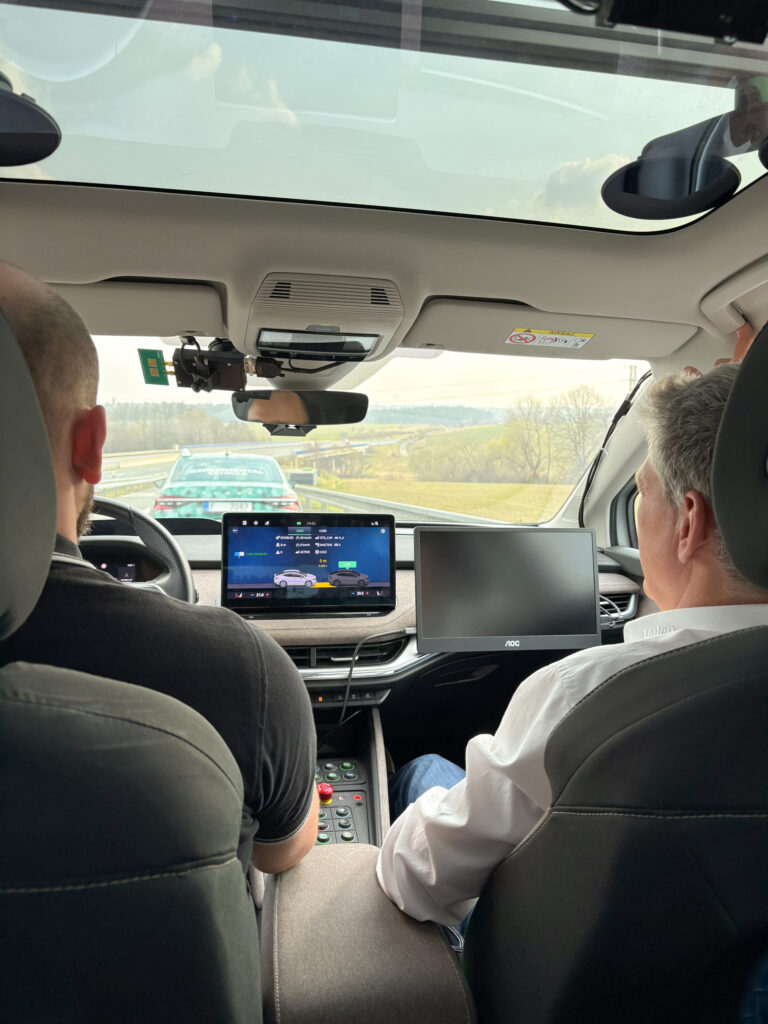
Within the collaboration with Valeo and REFRESH, the team has also developed a second-generation Drive-by-Wire interface for vehicle control, along with the comprehensive “Valeo Ray” sensor system for environmental monitoring and acquisition of perception data, technologies deployed in experimental vehicles. Discussions further covered third- and fourth-generation Drive-by-Wire systems. Results from the international HAL4SDV project under the Horizon Europe framework were also presented, in which both VŠB-TUO and Valeo participate as consortium members. The project aims to develop and pilot a European solution for software-defined vehicles (SDVs), representing next-generation vehicles beyond 2030. The VŠB-TUO team is responsible for developing an experimental demonstration vehicle with a novel SDV architecture, creating a virtual SDV within a laboratory simulation environment, conducting behavioral analyses of autonomous SDV drivers, and preparing educational materials for SDV-focused instruction.
An additional benefit of the collaboration with Valeo is that intellectual property remains with the university, allowing the results to be shared with other industry partners. For instance, autonomous driving technologies have recently been transferred to Lithuania for use by a company providing taxi services at the European level. In cooperation with Valeo, researchers are also developing technologies for autonomous shuttle buses, with plans to deploy them on the VŠB-TUO campus this autumn.
“Through our collaboration with Valeo, we are often developing forward-looking solutions with clear pathways to real-world application. These outcomes will be implemented not only within Valeo but also by other companies. Our shared objective is to accelerate the advancement of automated driving in Europe. At the same time, this partnership carries significant prestige, given Valeo’s position as a major global player,” Šimoník added.
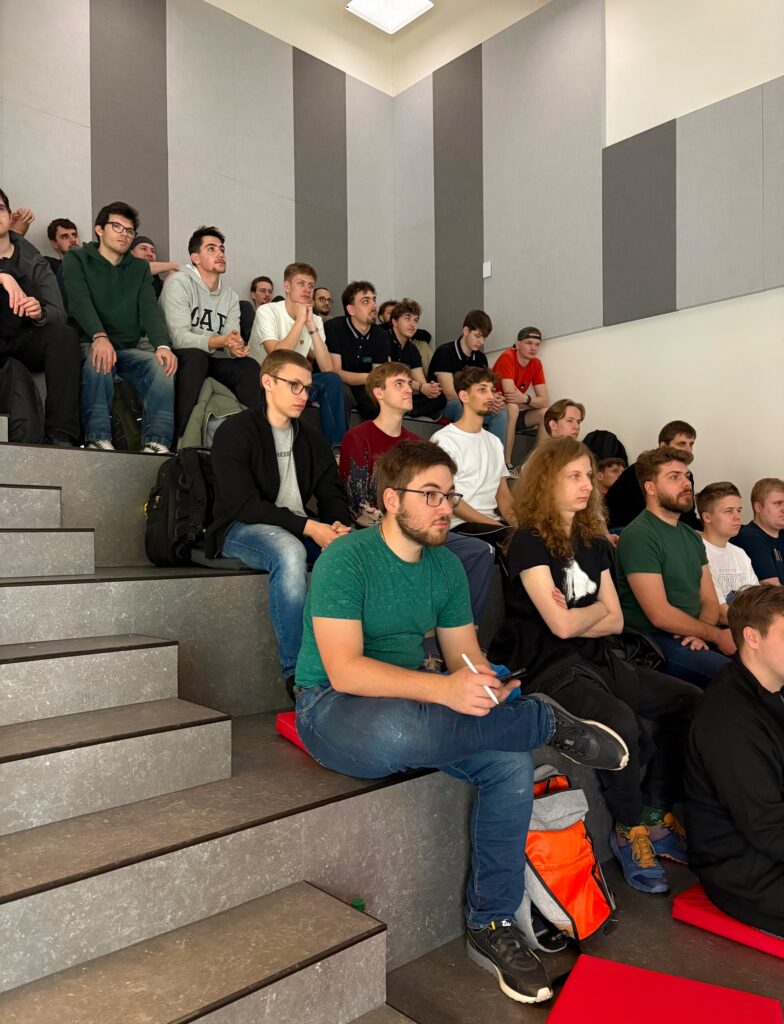
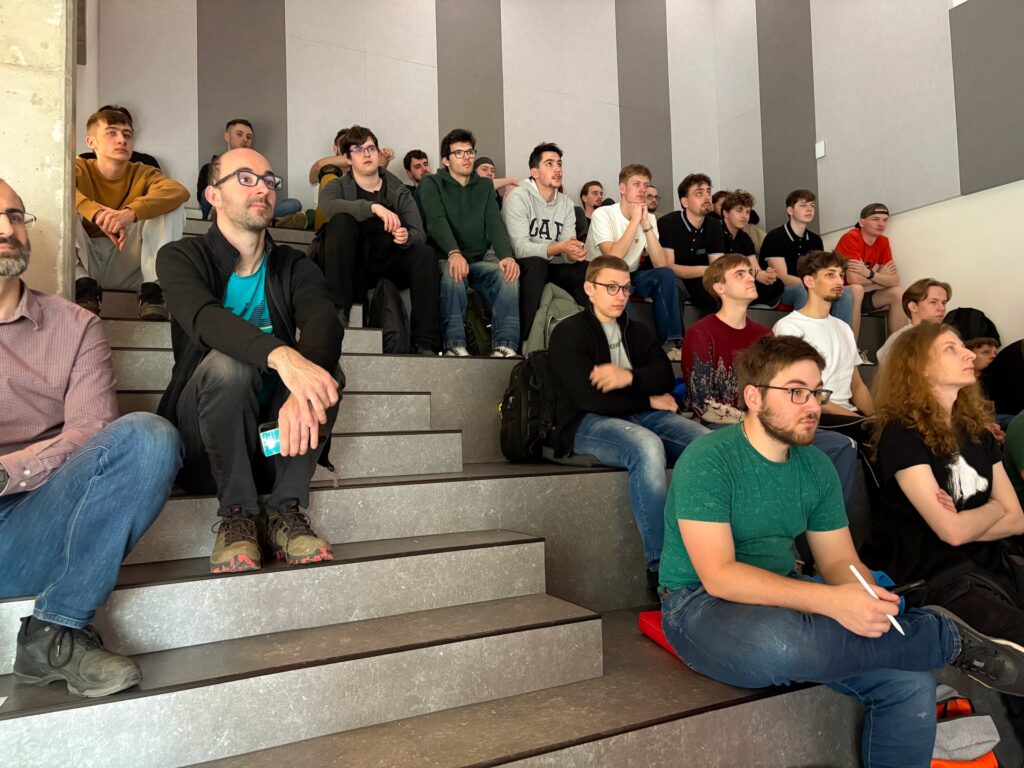
The program also included a lecture by Ralf Schneider for students. Valeo is among the leading suppliers of automotive technologies to manufacturers such as Volkswagen, Toyota, and BMW, among others worldwide.