
Materials engineering should not only push the boundaries of knowledge, but also deliver practical solutions
A new addition to the Energy Lab of the REFRESH project is materials scientist Dr. Sehreish Abrar. At the Centre for Energy and Environmental Technologies (CEET) of VŠB–Technical University of Ostrava, under the leadership of GrażynaSimhaMartynková, she focuses on research into advanced materials for energy and environmental technologies. In this interview, she discusses her work and research plans.
What brought you to VŠB-Technical University of Ostrava and REFRESH?
It was primarily the opportunity to work at the interface between cutting-edge materials research and the solution of real technological challenges. My previous research focused on high-entropy ceramics and novel coating materials for thermal and environmental barrier applications in aerospace engines, gas turbines, and other high-temperature systems. At VŠB-TUO, I saw an opportunity to build on this experience and expand it through research into materials for energy and environmental technologies.
What I value about REFRESH is its clear focus on supporting excellent research, innovation, and technology transfer in areas such as sustainable energy, environmental technologies, and smart materials, while closely linking them with industrial practice. This approach is very close to my own view of research. I have always believed that materials engineering should not only push the boundaries of scientific knowledge but also provide practical solutions for demanding applications. Being part of REFRESH allows me to contribute to this effort in an inspiring scientific environment, collaborate with experienced researchers, and make use of modern research infrastructure.
You would like to build on your previous research experience. Could you explain this in more detail?
My previous research focused on the development of novel high-entropy materials for modern turbine engines and advanced industrial applications. These demanding fields require materials capable of delivering exceptional performance under extreme temperatures, oxidative and corrosive environments, and intensive thermal cycling. This experience directly supports my current work in materials research for energy and environmental technologies, where we develop next-generation materials for applications such as energy conversion and storage, as well as environmental remediation.
In both areas, the fundamental mission is the same: to develop materials that maintain stability, durability, and functionality under demanding operating conditions. Whether for aerospace propulsion or advanced energy systems, the key questions are very similar: how to improve thermal stability, chemical resistance, structural integrity, and long-term performance. The expertise gained from designing advanced high-entropy coating systems now provides a strong foundation for developing new materials for energy and environmental applications, where robustness and reliability are equally essential.
Why do you find high-entropy materials so interesting?
They are fascinating because they open up a much broader space than conventional materials. By combining multiple principal elements, it is possible to tailor their properties in ways that are difficult to achieve with traditional compositions. This makes high-entropy materials especially promising for applications that must withstand several types of stress simultaneously, such as high temperatures, aggressive environments and mechanical loading.
What attracts me to high-entropy materials is both their scientific potential and their practical applicability. They help us better understand the relationship between material structure and properties in complex systems. At the same time, they open the way to a new generation of protective coatings, energy-related materials, and other advanced technologies where long service life, reliability, and multifunctionality are essential.
What are you currently working on?
At present, I am working on the design of advanced materials for energy and environmental applications. I am trying to understand how composition, manufacturing processes, and microstructure influence their properties and long-term stability.
This research is closely linked to the mission of REFRESH, which supports the development of environmental technologies, smart materials and sustainable energy while also strengthening cooperation between academia and industry.
What should your work contribute to in the long term?
I would like to contribute to the development of durable, high-performance, and practically applicable materials for energy, environmental, and high-temperature technologies. Improving the reliability, efficiency, and service life of materials can help reduce maintenance demands and support cleaner and more sustainable industrial systems.
At the same time, I would like to contribute to the development of the research environment at VŠB-TUO through international collaboration, high-quality scientific publications, and stronger links between advanced materials research and the real needs of engineering practice. The REFRESH project provides a valuable opportunity for professional growth while contributing to scientific excellence and the practical transfer of knowledge for long-term technological development.
What motivates you as a researcher?
My greatest motivation is the opportunity to develop materials that can have a real impact on future technologies. I am particularly inspired by research that combines deep scientific understanding with tangible engineering benefits. Materials engineering is a field in which even small advances in composition, processing methods, or material properties can significantly influence energy systems, environmental protection, and high-temperature technologies. This combination of challenge, creativity, and societal relevance continues to inspire me. In my view, research is meaningful when it not only expands the boundaries of knowledge but also delivers solutions to important technological challenges for industry and society.
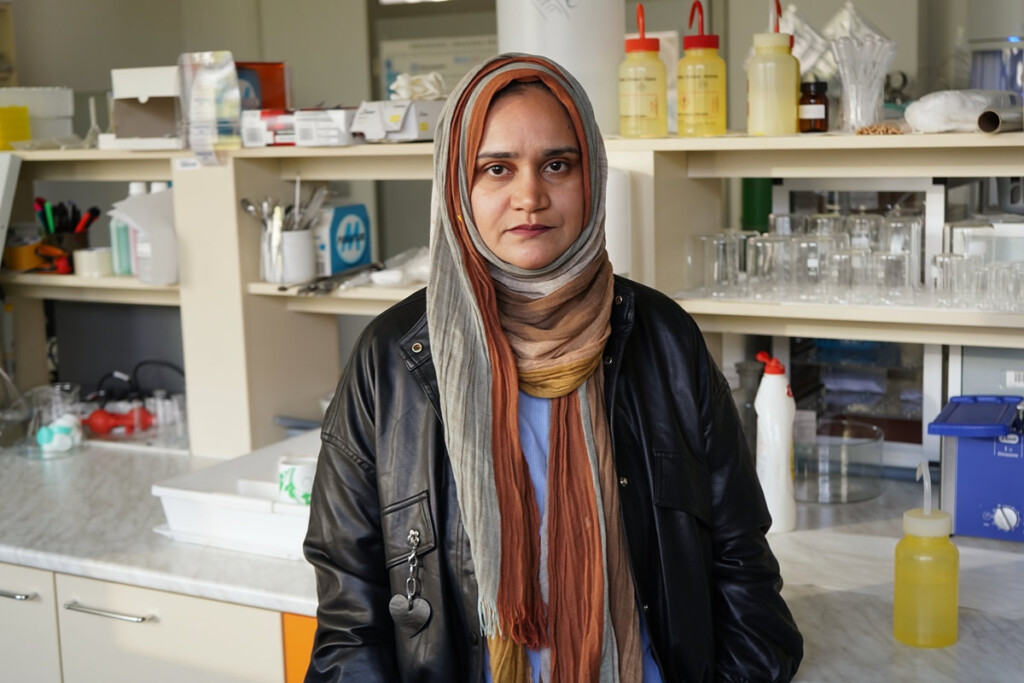
Dr. Sehreish Abrar graduated from the School of Materials Science and Engineering at Beijing Institute of Technology, China, in 2023. During the following two years, she worked as a postdoctoral researcher at the China University of Mining and Technology. She has published nine SCI-indexed articles as first author and has also contributed to numerous other publications as a co-author. Her current H-index is 8. Among the notable milestones of her scientific career are her participation in two research projects funded by the National Natural Science Foundation of China during her doctoral studies, followed by securing her own grant from the same agency as principal investigator during her postdoctoral appointment.