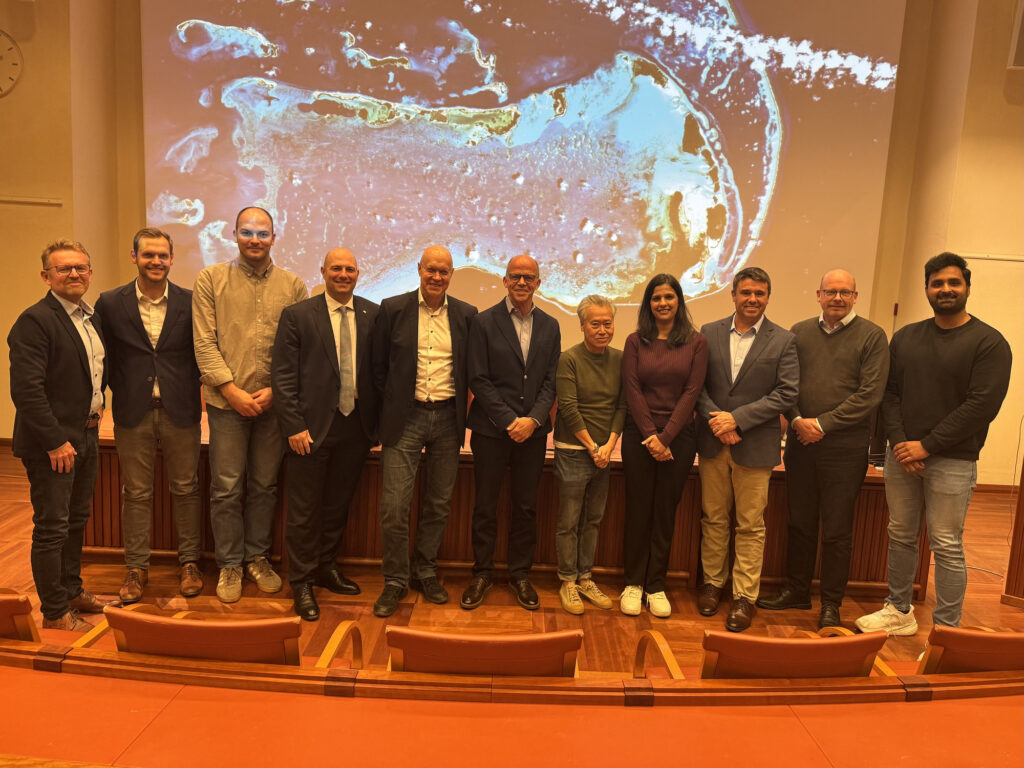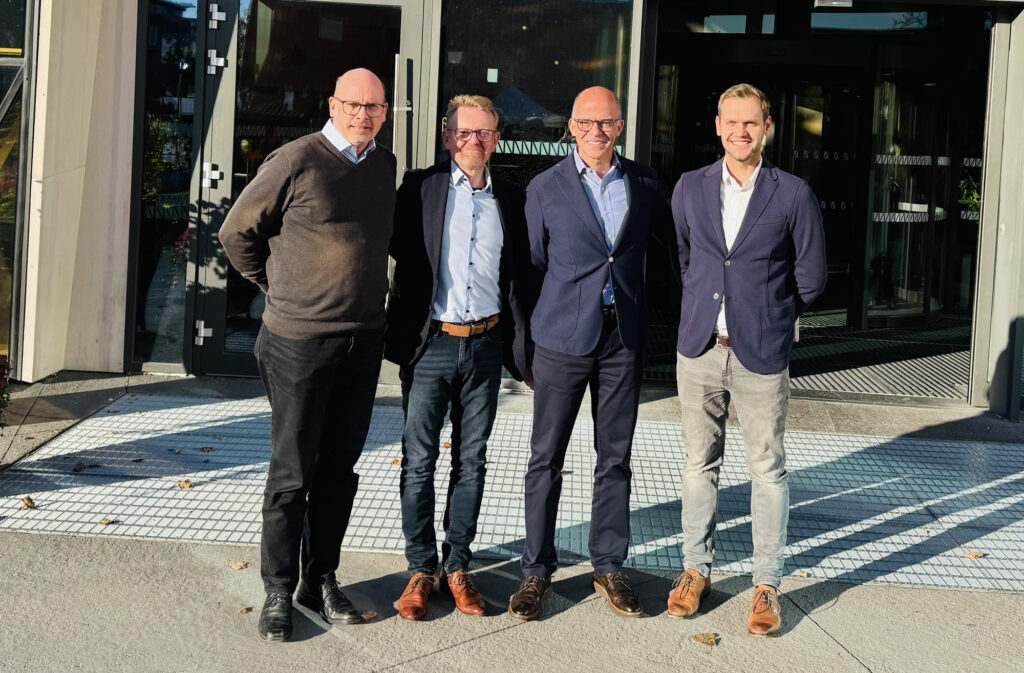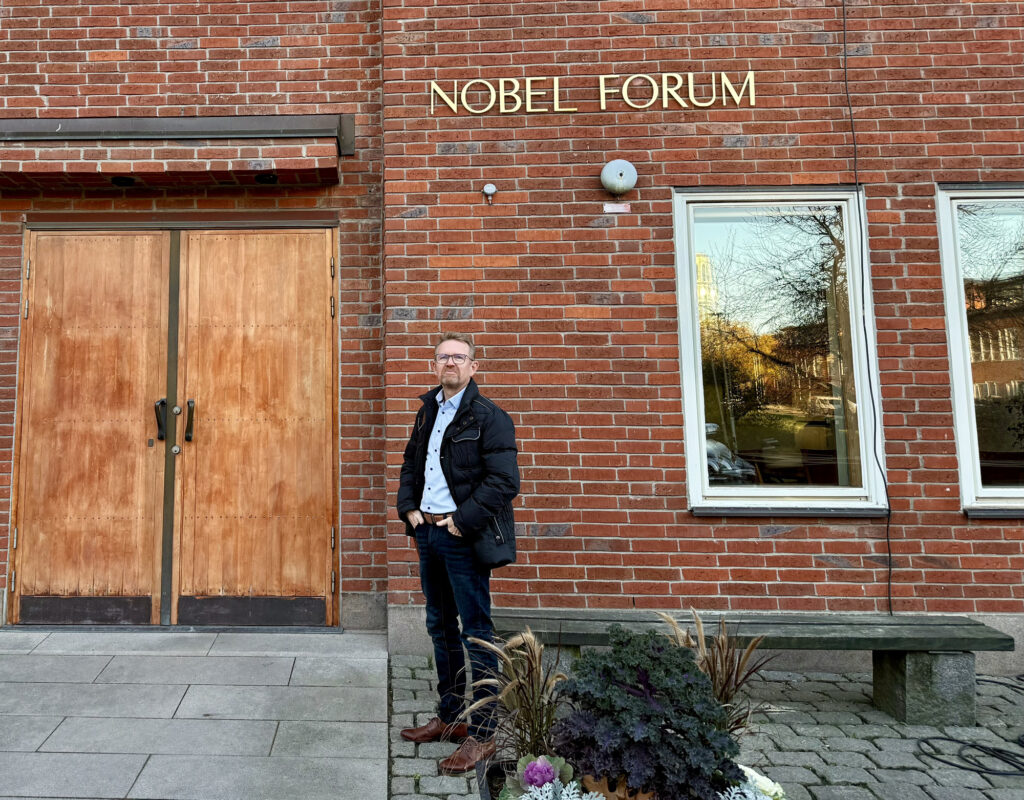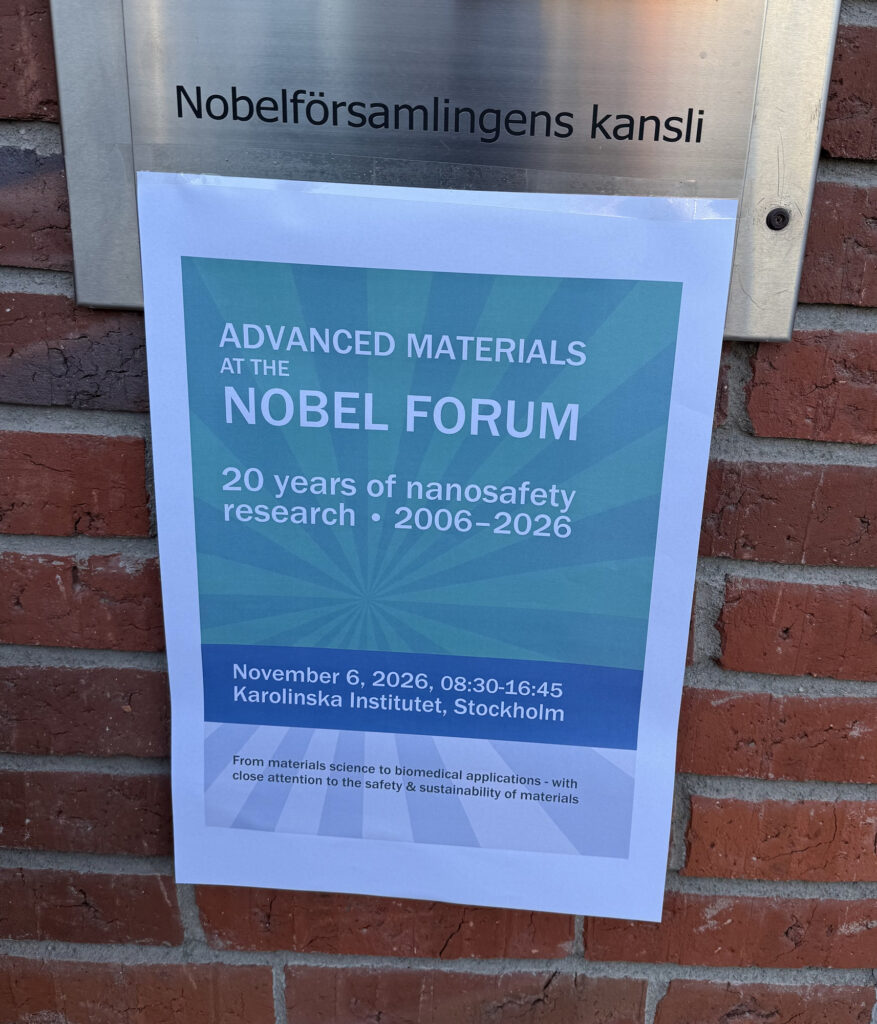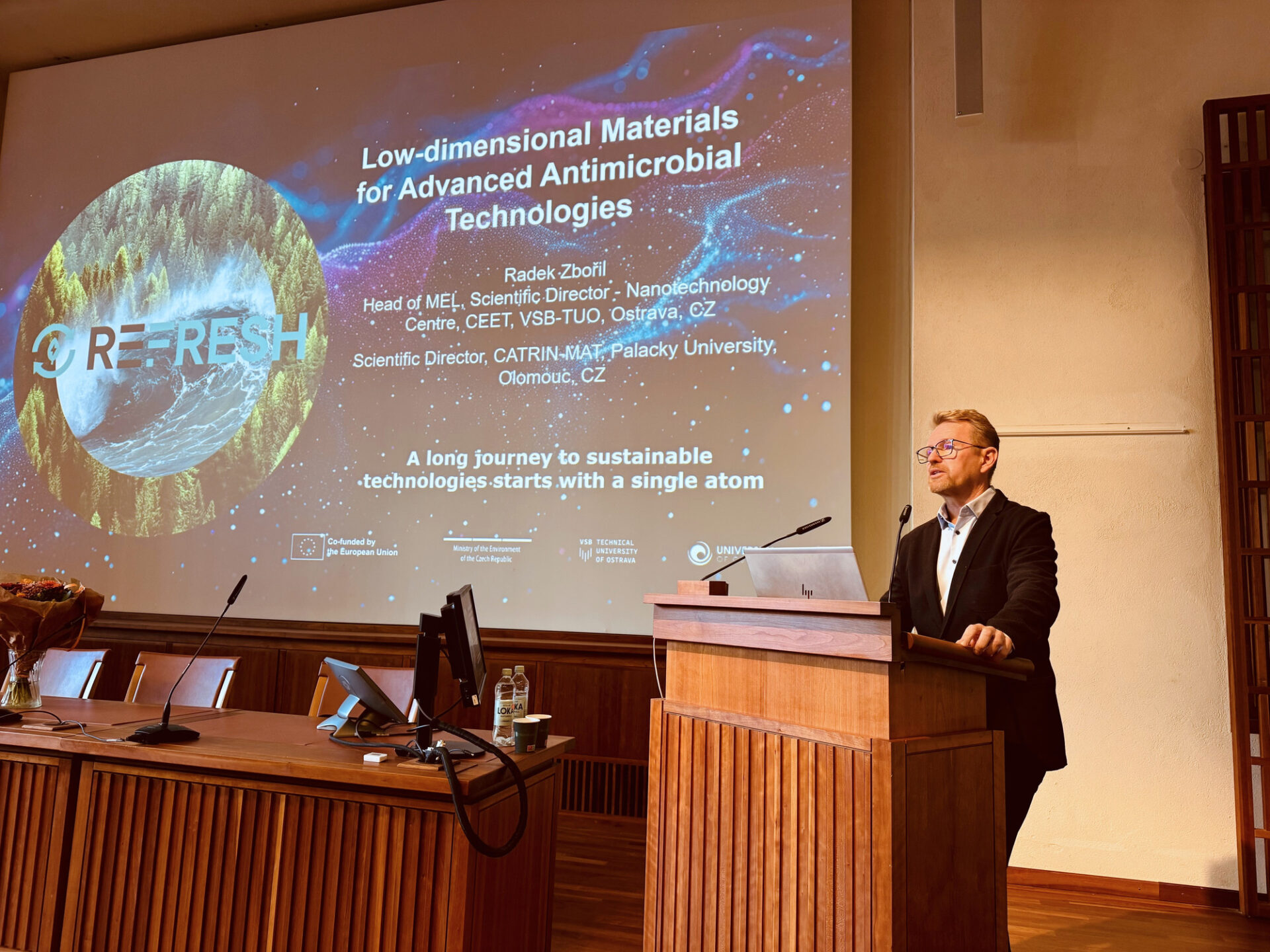
MEL researchers present their research at the Nobel Forum at Karolinska Institutet
Radek Zbořil and Tomáš Malina from the Materials-Envi Lab (MEL) presented their research on advanced antimicrobial materials and atomically precise nanomaterials targeting cancer cells at the prestigious Karolinska Institutet in Stockholm. The international mini-symposium, Advanced Materials – Advancing the Safety of Advanced Materials, took place at the Nobel Forum, where the laureates of the Nobel Prize in Physiology or Medicine are announced each year.
Professor Radek Zbořil delivered an invited lecture entitled Low-Dimensional Materials for Advanced Antimicrobial Technologies, presenting the latest research findings on the use of single-atom engineering in the development of a new generation of antibacterial and antifungal materials. His presentation also highlighted results achieved within the REFRESH project and the potential applications of atomically engineered materials in medical diagnostics.
“Giving a lecture at such a prestigious venue was an exceptional experience. It is becoming increasingly clear that single-atom engineering technologies have enormous potential in medicine, as demonstrated by the interest of our international colleagues in collaboration. During the symposium, we agreed with colleagues from Israel to collaborate on chemical modifications of our materials that would enable their targeted delivery in cancer therapy. We also discussed opportunities to participate in joint European projects aimed at combating antibiotic resistance,” said Zbořil.
The mini-symposium focused on advanced materials and nanotechnologies, addressing not only their development and biomedical applications but also their safety assessment and potential health risks. Invited speakers included Roland Grafström from Karolinska Institutet, an expert in toxicology and the health risks of nanomaterials; Israeli scientist Avi Schroeder, whose research focuses on targeted drug delivery systems and the use of nanotechnology in treating serious diseases, including cancer; and Peter Wick from Switzerland, an expert in nanomaterial safety and nanotoxicity.
Tomáš Malina also contributed to the scientific programme with a lecture entitled Engineering Atomically Precise Materials to Exploit Cancer Cell Vulnerabilities, focusing on the potential of atomically precise materials to selectively target cancer cells.
“It was great to be back at Karolinska Institutet, where I previously worked as a postdoc, and present the progress of our research in the field of advanced materials safety. What I particularly enjoyed was the combination of excellent science and a genuinely friendly atmosphere, which created a great environment for interesting discussions and exchanging ideas,” said Malina, who previously worked in Stockholm in the research group of Professor Bengt Fadeel, one of the world’s leading experts in nanotoxicity.