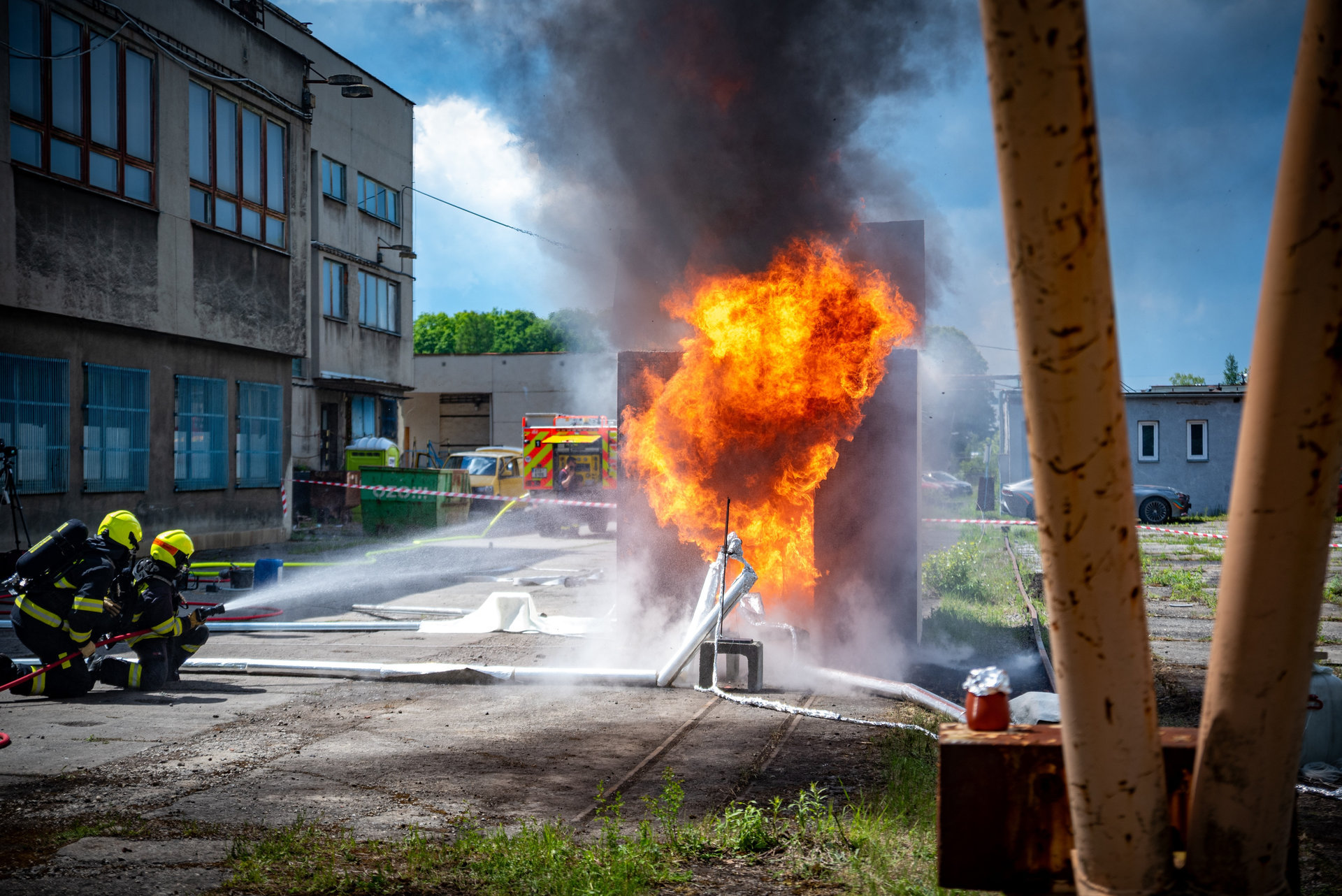
The experiment delivered significant findings regarding the fire safety of wooden buildings
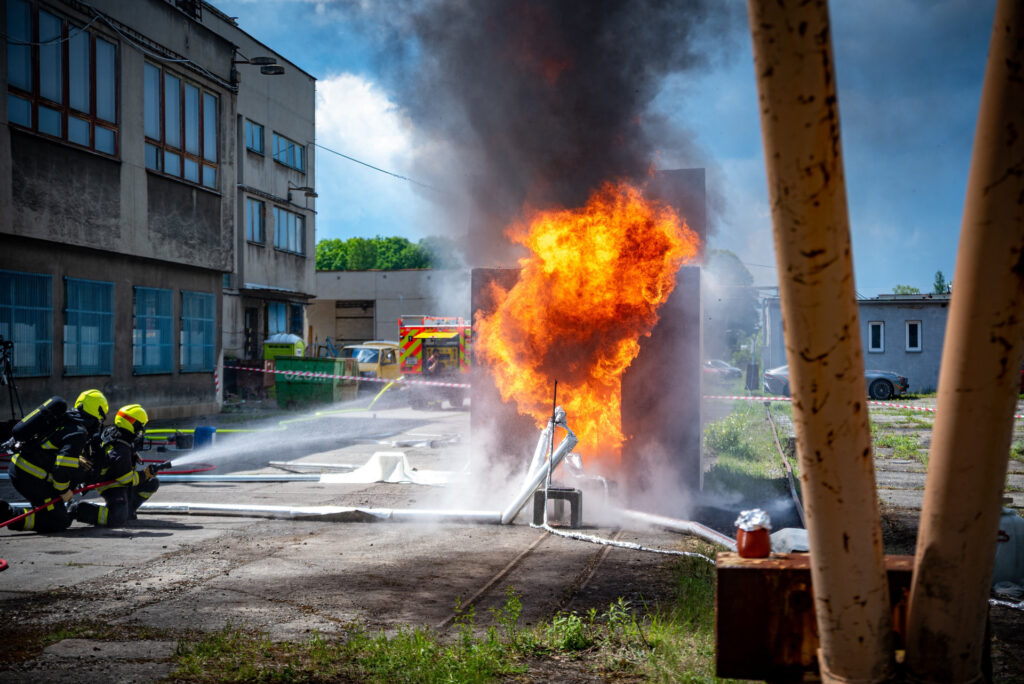
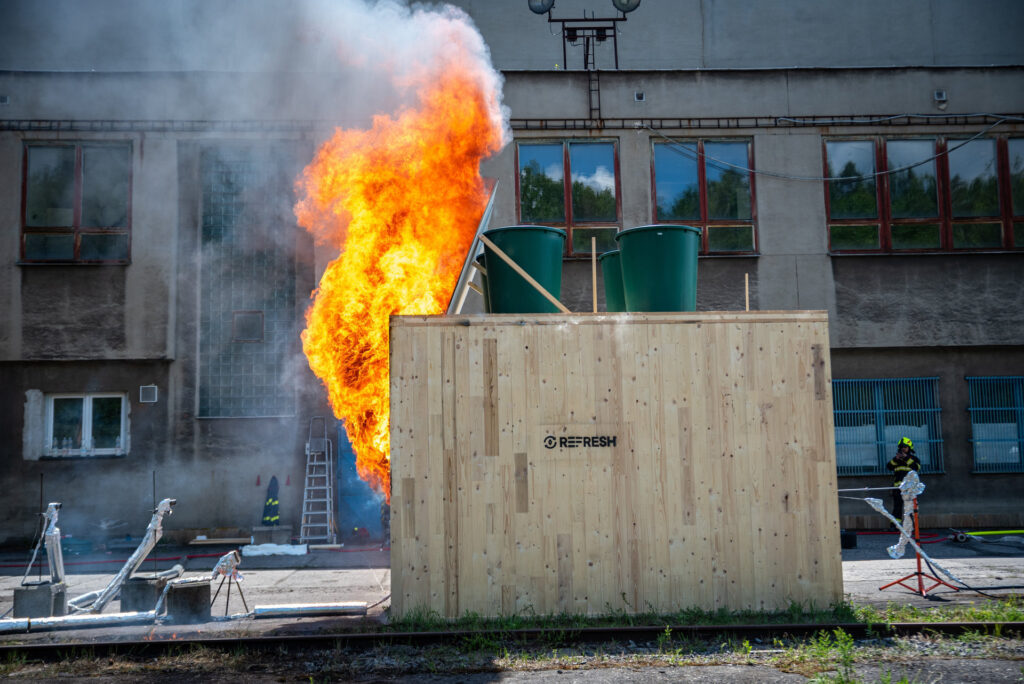
The fire behavior of timber structures was investigated in a large-scale fire test conducted in May by experts from the Faculty of Safety Engineering at VŠB-TUO and the Energy Lab REFRESH at the DIAMO experimental facility in Chlebovice. The study focused primarily on structures made of CLT panels, which are increasingly used in modern timber buildings.
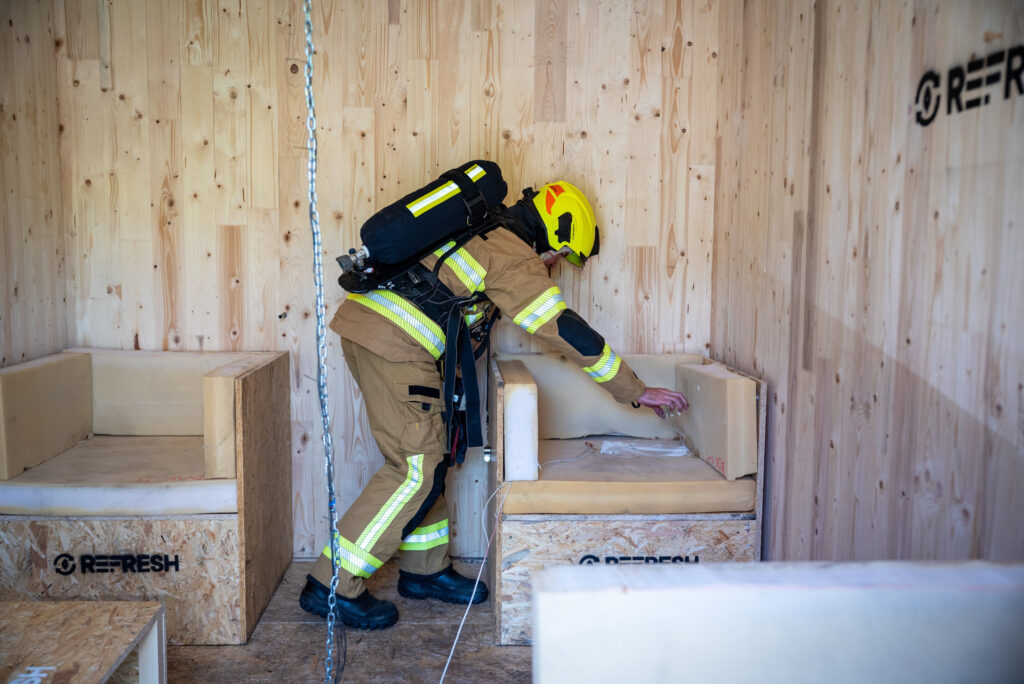
The researchers simulated an interior fire to examine how the structures respond under fire conditions, how rapidly the wood chars, how heat propagates, and under what circumstances the fire may self-extinguish or, conversely, reignite. The collected data revealed that CLT structures exhibit distinctive fire behavior, which has important implications for the safe design of multi-story timber buildings.
“In conventional structures, fire intensity gradually declines once the fire load has been consumed. In exposed CLT panels, however, high temperatures may cause the adhesive between individual wood layers to deteriorate, resulting in the charred layer detaching and exposing fresh, uncharred wood. This can trigger reignition and extend the overall burning period,” said experiment leader Eva Šopíková.
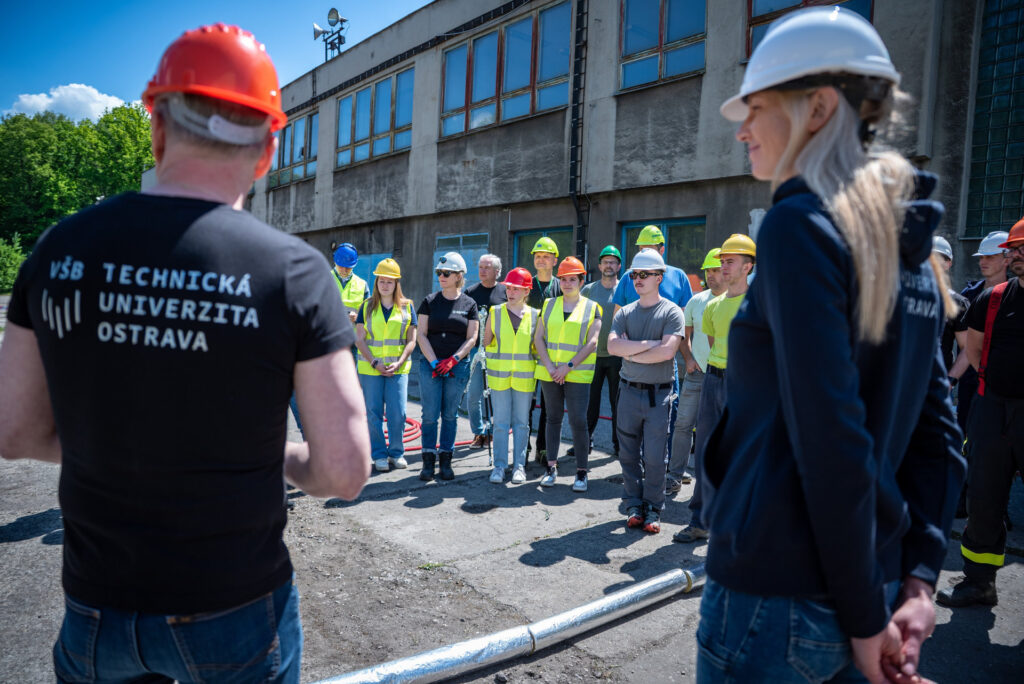
This phenomenon can substantially increase the thermal load on a structure, influence the progression of the fire’s smoldering phase, and complicate firefighting operations. The results of the experiment will therefore help refine fire safety design methodologies, validate the computational models used in design practice, and contribute to the safer use of wood in construction. An important aspect of the experiment was also the involvement of students from the Faculty of Safety Engineering’s Fire Protection Engineering programme, who worked alongside the industrial partner Vesper Frames in setting up the measurements and conducting the test.