
Ulrich Rüde: Successful collaboration is built above all on personal relationships
Ulrich Rüde, an expert in applied mathematics, computational science, numerical simulations, fluid dynamics, and high-performance computing (HPC), has been collaborating with colleagues from the Department of Applied Mathematics at the Faculty of Electrical Engineering and Computer Science at VŠB-TUO for more than a decade. This long-standing partnership led to his involvement in REFRESH, where he joined the research team of the Industry 4.0 & Automotive Lab in 2024.
What is your main research focus?
My research field is Scientific Computing and Computational Science. In this field, mathematical and computer science techniques are used to solve challenging problems in science and engineering with the help of modern computing technology. The most advanced problems often require the computational power of supercomputers. The range of applications is almost unlimited and includes climate simulations, simulations of renewable energy systems such as wind farms, as well as fundamental scientific questions, for example, those arising in Earth’s mantle convection. These are just a few examples. While the range of applications is enormous, they all share a common foundation of methods used to model, simulate, and predict the behavior of such systems.
What are you working on within REFRESH?
I collaborate primarily with colleagues in the Department of Applied Mathematics. They form a highly respected international research group in this field. Their expertise includes, for example, optimization methods and the solution of large-scale computational problems, creating many opportunities for joint research. One of the many research questions we are addressing together is how modern hardware, such as computers equipped with graphics processors (GPUs), can be used to solve problems in the physical sciences.
You are an internationally recognised expert. What motivated you to collaborate with researchers in Ostrava?
The research team in Ostrava is internationally well known for its decades-long development of methods and software in the field of scientific computing. This is complemented by additional local strengths, such as the presence of the Czech national supercomputing center IT4Innovations (IT4I) directly on campus and a long-standing collaboration with the Institute of Geonics at the Czech Academy of Sciences. Together, these factors make the Department of Applied Mathematics a very strong player in my field of research. However, scientific excellence and institutional strength are only part of the picture. Successful collaboration ultimately depends on human interaction. In this regard, the wonderfully friendly and welcoming atmosphere in the department has been especially important for me as a foreign researcher from Germany. This is a factor that should not be underestimated.
What do you consider the most significant outputs of the collaboration so far, and what are your plans for the next phase?
Several excellent results have already led to new publications, for example, on the use of adaptive parallel methods for solving partial differential equations. However, in a deep and abstract field such as mathematics, one should not underestimate the time required to achieve fundamentally new results. From this perspective, two years is a relatively short period. Most of the research projects are still ongoing, and their full impact can only be expected to become visible in the months and years ahead.
What are the most pressing challenges in your field today?
Our field is currently at a turning point, facing enormous opportunities and challenges at the same time. The emergence of large language models and other advances in artificial intelligence has created many direct research questions, as well as equally important indirect ones. Most obviously, AI techniques can in some cases be used to improve existing simulation and modeling approaches. Perhaps less obviously, they can also significantly accelerate the development of scientific software. At the same time, AI-driven advances in hardware are leading to new computer architectures that require us to rethink even classical algorithms and software. Another fundamental challenge, and opportunity, will arise from quantum computing. However, this topic is too broad to discuss in detail here, as the field remains largely open and is developing rapidly.
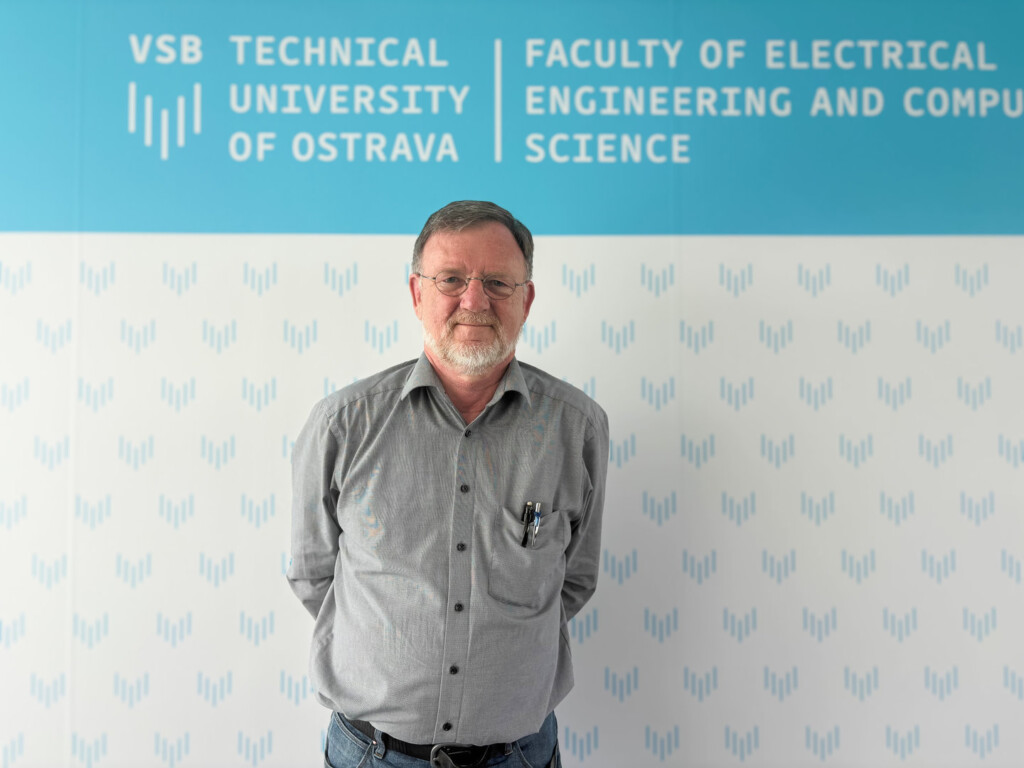
Ulrich Rüde
For many years, Ulrich Rüde served as Professor of Computational Science and Engineering at Friedrich-Alexander-Universität Erlangen-Nürnberg (FAU), where he held the position of Chair of System Simulation from 1998 until 2024. Until 2024, he also led the Parallel Algorithms Team at the Centre Européen de Recherche et Formation Avancée en Calcul Scientifique (CERFACS). In addition, he serves as Editor-in-Chief of SIAM Journal on Scientific Computingand is a member of the editorial boards of theInternational Journal of Parallel and Emergent Distributed Systems, theInternational Journal of Computational Science and Engineering, and theElsevier Journal of Computational Science.
He is the author or co-author of more than 670 publications, which have received over 10,700 citations. His H-index stands at 53, and he has been honoured with numerous prestigious awards.