
Ing. Radomír Smolka: Czech industry needs not only new technologies, but also environment where they can be rapidly tested
Strong cooperation with industry partners is one of the cornerstones of REFRESH, helping to accelerate the transfer of innovation into real-world applications. To discuss this topic, we spoke with Radomír Smolka, Member of the Board of Directors at TATRA TRUCKS, who is responsible for development. The partnership between the two institutions has a long-standing tradition and continues to deliver tangible results.
How do you perceive the partnership between Tatra Trucks and VŠB-TUO?
We consider our cooperation with VŠB-TUO to be both natural and strategically important. Tatra Trucks has deep roots in the Moravian-Silesian Region, and the university is the nearest major technical and research institution with expertise that closely matches our needs in the development of advanced truck technologies.
Our joint projects have repeatedly demonstrated that the university can offer knowledge and capabilities with direct value for industrial practice. A good example is the development of the automated driving system for the Tatra Force vehicle, where we are working closely with the Mobility Lab VŠB-TUO and Valeo.
Tatra also places great importance on involving doctoral and master’s students alongside academic experts in these projects. This approach creates a strong link between research, development, and the education of the next generation of engineers.
Which areas have seen the greatest progress so far, perhaps also thanks to REFRESH?
The most significant advances have been made in fields that are currently transforming the future of heavy-duty vehicles: automated driving, vehicle electronics, sensor technologies, software integration, and alternative propulsion systems.
One tangible outcome is the Tatra Force prototype equipped with an automated driving system. The project is structured in three phases, beginning with the integration of sensors and basic driver-assistance functions, followed by the implementation of lidar technology, and culminating in a stage where the vehicle will be able to control steering, speed, engine operation, transmission, and braking through dedicated software and hardware interfaces. The objective is to achieve Level 3 automation in the prototype vehicle.
A particularly important result of this collaboration is the first-generation Drive by Wire Truck Interface. This is not merely an experimental platform, but a technological foundation that enables developers to test algorithms and operating modes for both lower and higher levels of autonomy. Its validation has also opened the door to remote truck operation through the Truck Remote Control system.
REFRESH fits naturally into this effort, as it is built around the concept of living laboratories, where cutting-edge research is carried out in close cooperation with industry and with a strong focus on end-user needs. For Tatra, the most relevant areas include digitalization, robotization, transport automation, hydrogen technologies, battery systems, and advanced materials.
In April, we held a meeting focused on expanding our cooperation into additional areas. What specific opportunities are being discussed?
Our goal is to extend the partnership with VŠB-TUO well beyond a single project or technological domain.
We see considerable potential in further collaboration on vehicle electronics, control unit development, system integration, as well as software testing and validation. These are all disciplines that have become essential to the development of modern trucks. Equally important are cybersecurity solutions for vehicle systems, the processing and analysis of data from test vehicles, and the use of simulation tools to develop driving characteristics and advanced assistance functions.
Another area of interest is alternative propulsion. Tatra has been pursuing projects within the e-Drive family for several years, and the next phase includes the Tatra Force e-Drive FCEV 6×4, a vehicle powered by hydrogen fuel cells and equipped with automated steering and remote-control capabilities. The project is carried out by a consortium consisting of Tatra Trucks, DEVINN, and VŠB-TUO, with completion planned for mid-2028.
We also see strong opportunities in testing and development infrastructure. The REFRESH project is creating new facilities, including laboratories for fuel cells and battery storage, a testing ground for autonomous vehicle development, and advanced additive manufacturing technologies. These are exactly the kinds of capabilities that can help industrial partners accelerate the development, testing, and validation of new technologies.
Tatra has long invested in innovation and development. Which areas do you see as most critical for maintaining the competitiveness of the Czech industry today?
I would highlight four key areas: digitalization, automation, alternative powertrains, and the rapid transfer of research results into real-world applications. As vehicles become increasingly complex systems integrating mechanical engineering, electronics, software, sensors, and data processing, future competitiveness will depend on the ability to deliver complete technical solutions.
Tatra vehicles operate in some of the most demanding environments, serving the military, emergency services, mining, construction, and municipal sectors. Innovation is therefore driven by practical needs and real-world performance, whether in automated and remote-controlled driving, hydrogen and battery-powered vehicles, or new design and manufacturing methods.
Can experts from VŠB-TUO, and particularly REFRESH, which aims to strengthen links between research, industry, and regional transformation, contribute to this effort?
Absolutely. REFRESH can make a major impact by providing an environment where new technologies can be rapidly tested, validated, and transferred into practice. By connecting university research with industry and end-user needs, its living labs support innovation in sustainable energy, advanced materials, digitalization, robotics, and automation.
For Tatra, the Industry 4.0 & Automotive Lab is particularly valuable. Its focus on artificial intelligence, robotics, additive manufacturing, and advanced automation closely aligns with our development priorities and has the potential to shape the future of heavy-duty vehicle development, testing, and production.
How important is access to modern technologies and skilled talent for companies today?
It is absolutely critical. Today, competitiveness depends not only on products but also on the ability to innovate, adopt new technologies, and attract skilled talent.
This is why Tatra continues to expand its development activities not only in Kopřivnice, but also in Brno and Ostrava. By strengthening its presence in these locations, the company stays close to universities, research teams, technical talent, and strategic partners, while benefiting from strong research and innovation ecosystems.
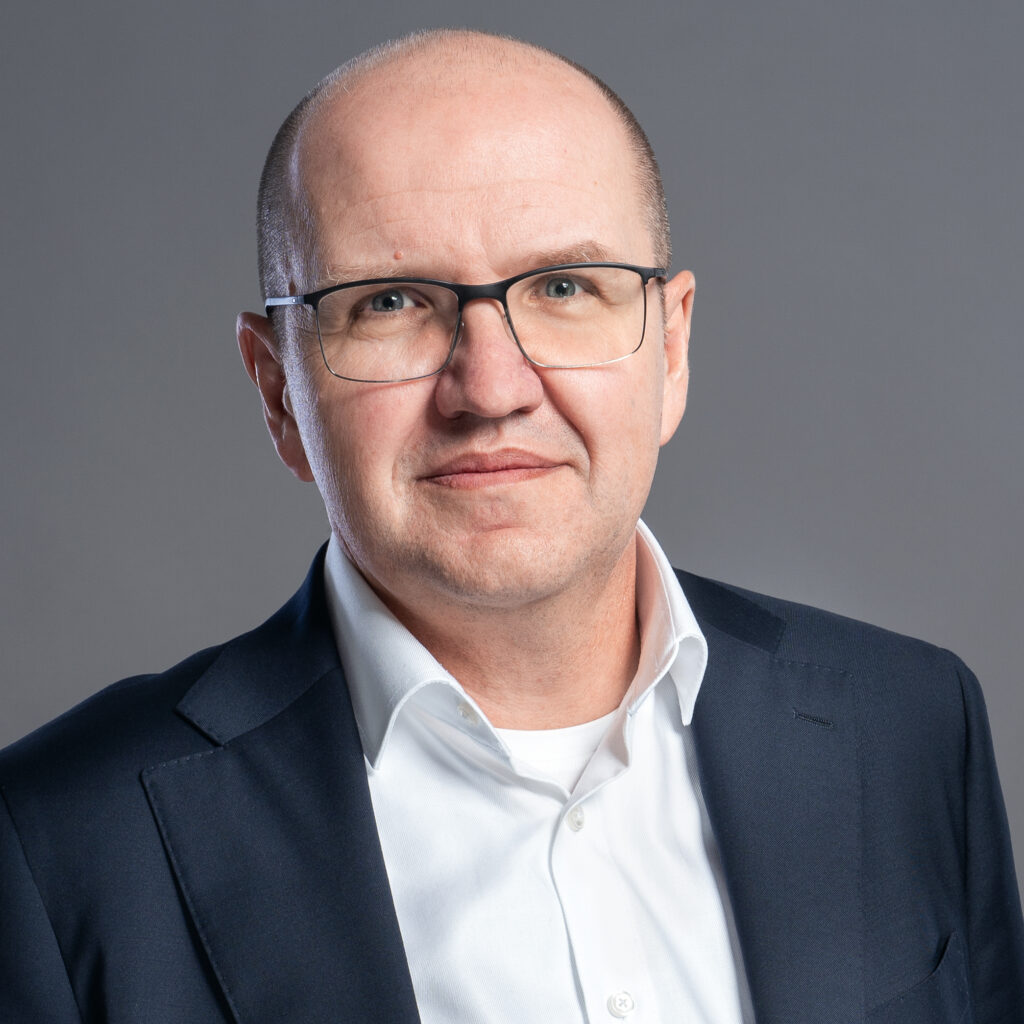
Ing. Radomír Smolka
Radomír Smolka serves as a Member of the Board of Directors at Tatra Trucks, where he oversees research and development. He is regarded as one of the leading figures in the Czech automotive sector. A graduate of the Faculty of Mechanical Engineering at Brno University of Technology, he joined Tatra as an engine designer and has spent nearly his entire career with the company. He has contributed to the development of numerous key vehicle models and has long focused on innovation, special-purpose vehicles, and future mobility technologies.